Camino Primitivo

From 3.000 €
Duration
14 days - 13 nights
Distance
79.5 miles - 128 km
Type
Caminos
Jose Mari Ardanaz:

Passionate about the Caminos and stories, creating authentic experiences so that every pilgrim discovers the Camino like a local.

Book now

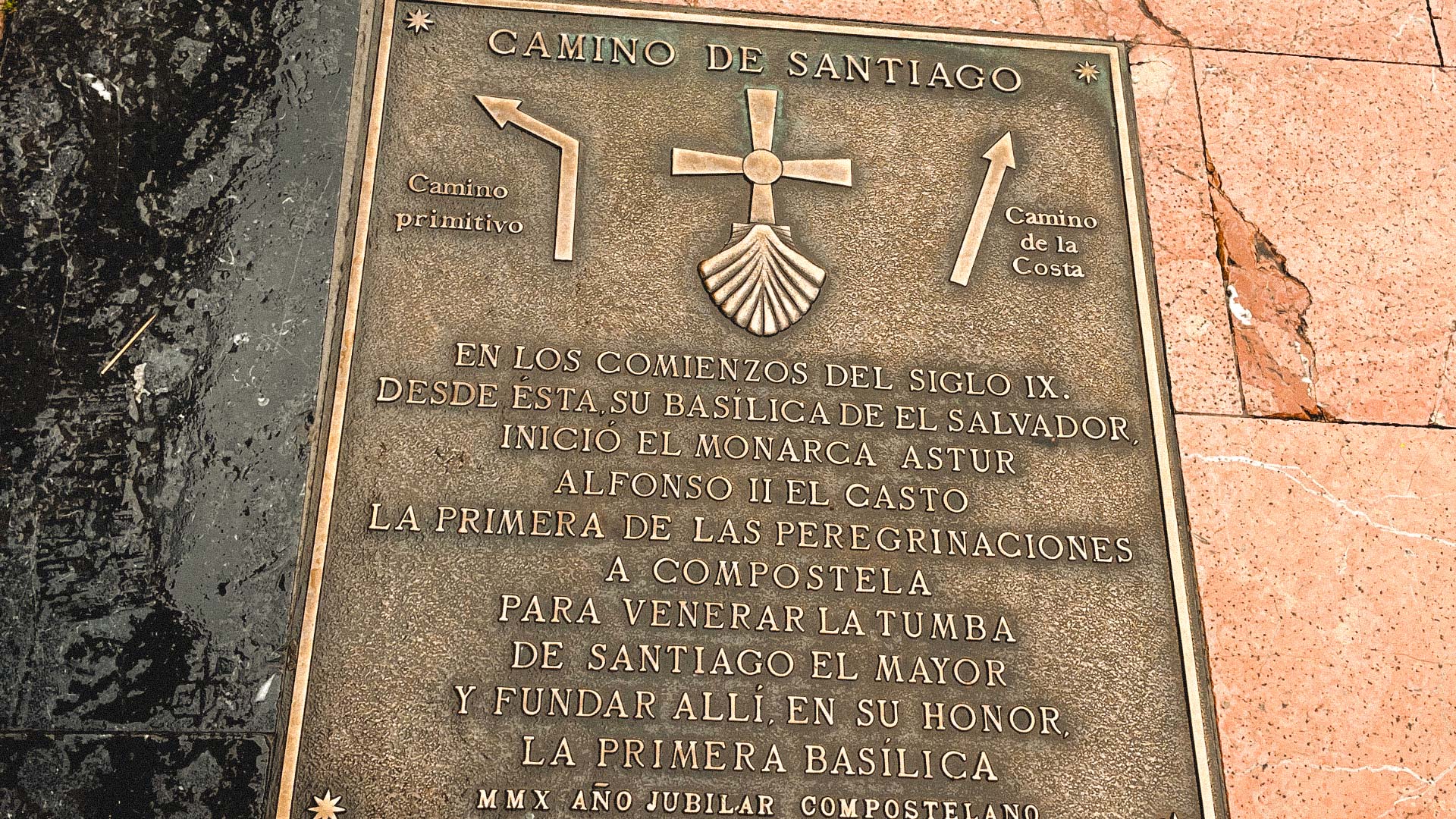
If you’re looking for a genuine, wild, and history-filled Camino, the Camino Primitivo is for you. Not only is it the oldest documented Jacobean route, first walked by king Alfonso II in the 9th century to honor the newly discovered tomb of the Apostle Saint James, but it is also one of the most intense and rewarding. Here, every step is a connection with the past, with nature in its purest form, and with yourself.

This Camino challenges and rewards you in equal measure. You’ll traverse the most spectacular landscapes in northern Spain, from the green mountains of Asturias to the valleys and forests of Galicia, following trails that seem straight out of a medieval tale. Unlike busier routes, here you’ll find silence, serenity, and the vastness of nature, offering the perfect space for reflection and adventure. Each day, you’ll feel as though you’re traveling through a wilder, more authentic path, far from the crowds, experiencing the Camino in its purest form.

You’ll discover charming villages, genuine hospitality, and a gastronomy that turns every meal into a celebration. From Asturian cider and cheeses to Galician octopus and empanadas, every bite will remind you that this Camino isn’t just about walking, it’s about savoring the experience. And when you finally reach Santiago de Compostela, you’ll know you’ve completed more than just a pilgrimage, you’ve embarked on a journey of endurance, beauty, and authenticity.

It’s not the easiest Camino, but it’s one of the most unforgettable. Are you ready? Discover your own Camino!

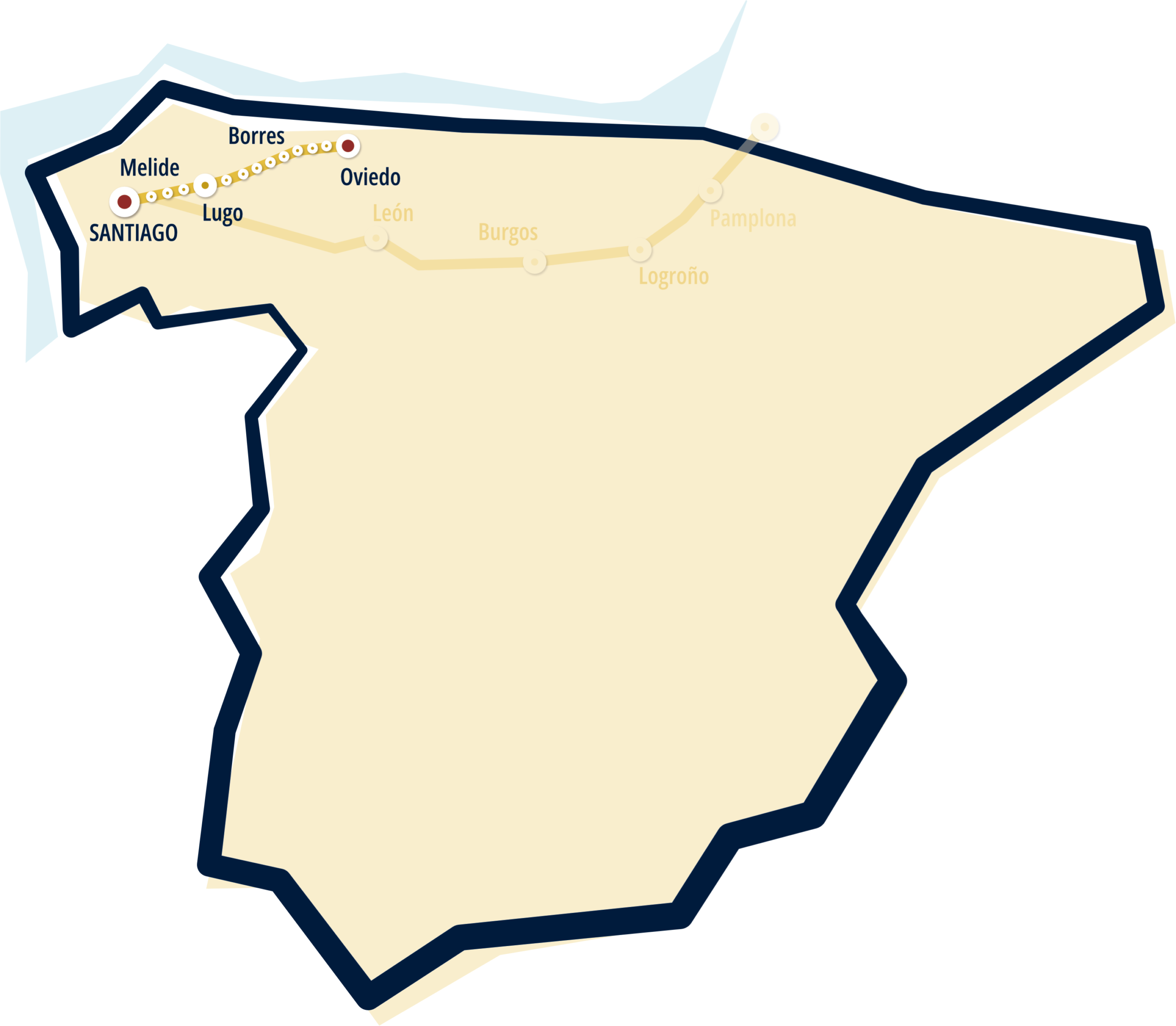
Route

1
Oviedo - Grado
2
Grado - Salas
3
Salas -Tineo
4
Tineo - Borres
5
Borres (Hospitales route) - Berducedo
6
Berducedo - Grandas de Salime
7
Gradas de Salime - A Fonsagrada
8
A Fonsagrada - O Cádavo
9
O Cádavo - Lugo
10
Lugo - A Ponte Ferreira
11
A Ponte Ferreira - Melide
12
Melide - A Calle de Ferreiros
13
A Calle de Ferreiros - Lavacolla
14
Lavacolla - Sanitago de Compostela

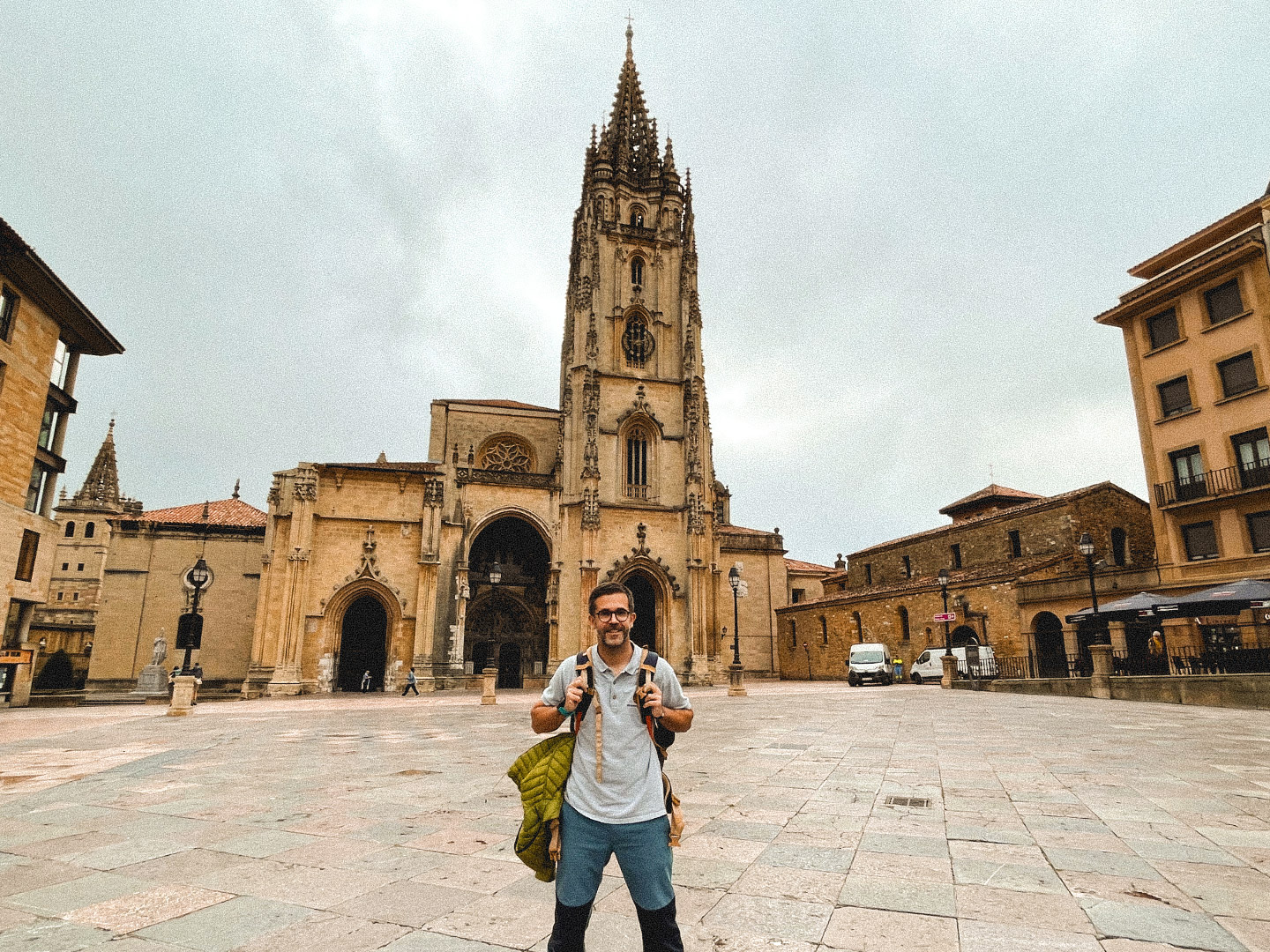
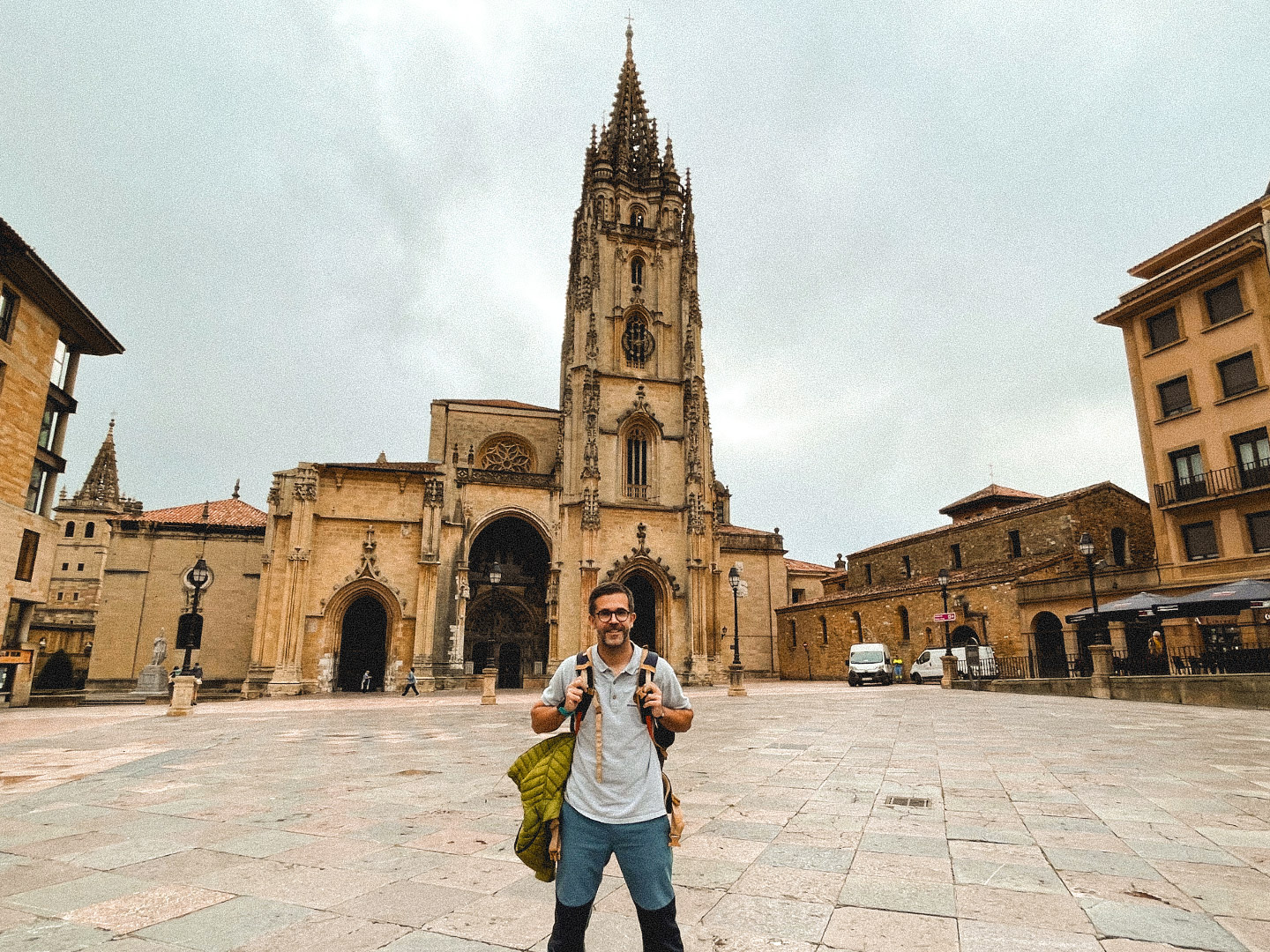
Jose Mari posando frente a la Catedral de San Salvador de Oviedo en un día nubladoThe beginning of your own Primitive Way

Distance: 15,7 miles – 25,2 km

The first stage offers a mix of urban settings, forests, and rolling green hills, characteristic of Asturias. Starting from the Cathedral of San Salvador, the route takes you through rural paths and small roads, with challenging ascents, such as the climb to Escamplero.

Along the way, you’ll pass through historic villages like San Lázaro de Paniceres, Loriana, and Peñaflor, home to a medieval bridge over the Nalón River. Another highlight is the Chapel of Santa María de Valsera, a perfect spot for a short rest. The stage ends in Grado, a lively town known for its traditional market and welcoming atmosphere.

Gastronomy is a key part of this stage. Asturian cider, Afuega’l Pitu cheese, and hearty fabada asturiana provide the perfect energy boost. In Grado, don’t miss the famous “tocinillos de cielo” a delicious traditional dessert. With its blend of landscapes, history, and local flavors, this stage is a perfect introduction to the Camino Primitivo.
Nature, history and northern flavours

Distance: 13,9 miles – 22,3 km

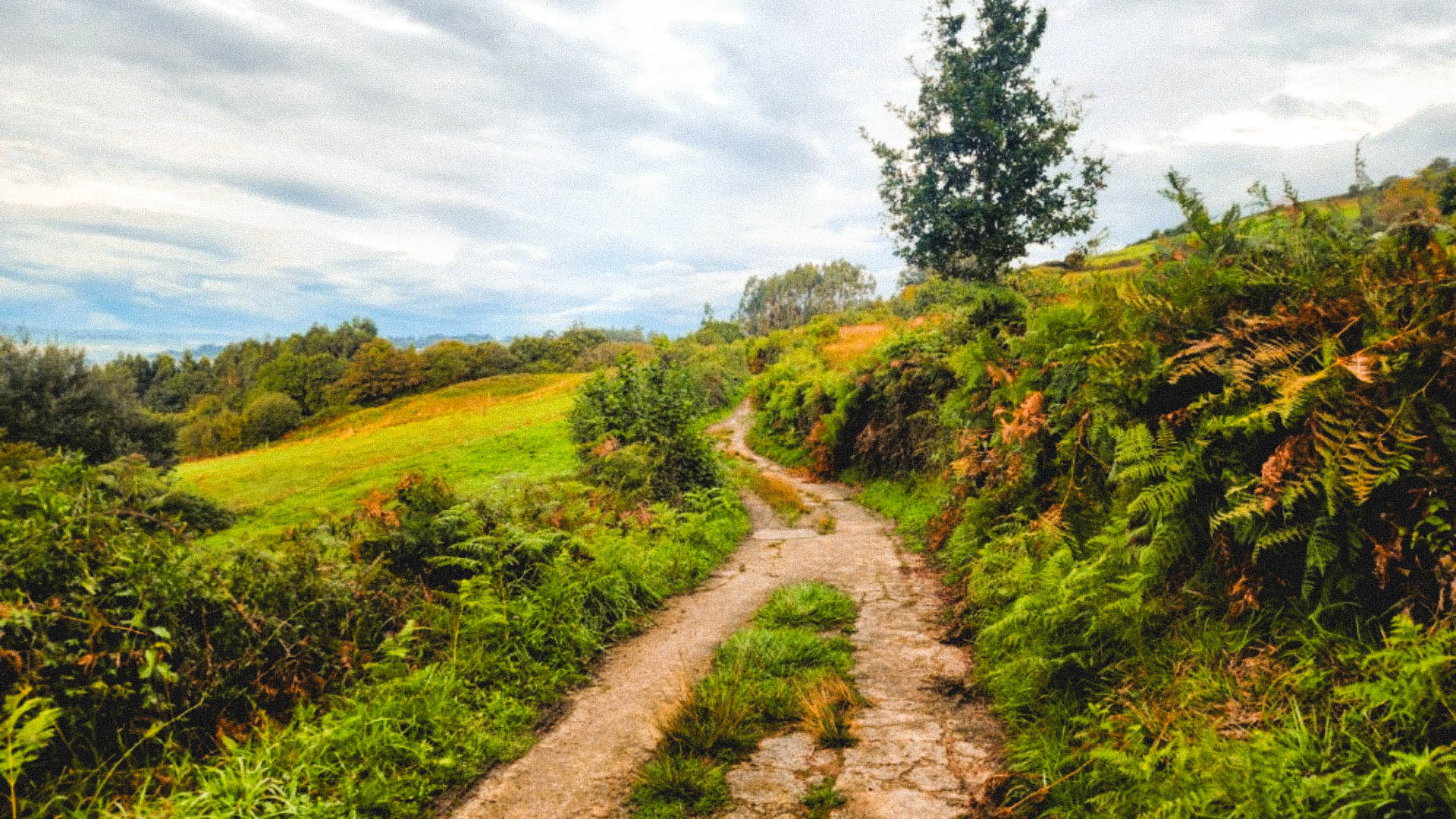
The stage between Grado and Salas winds through green hills, valleys, and forested sections, showcasing the typical Asturian landscape. While not excessively difficult, it features continuous climbs, such as the ascent to Venta del Escamplero, and technical descents that require caution. The route follows a mix of rural paths and small roads, offering a peaceful and enjoyable walk.

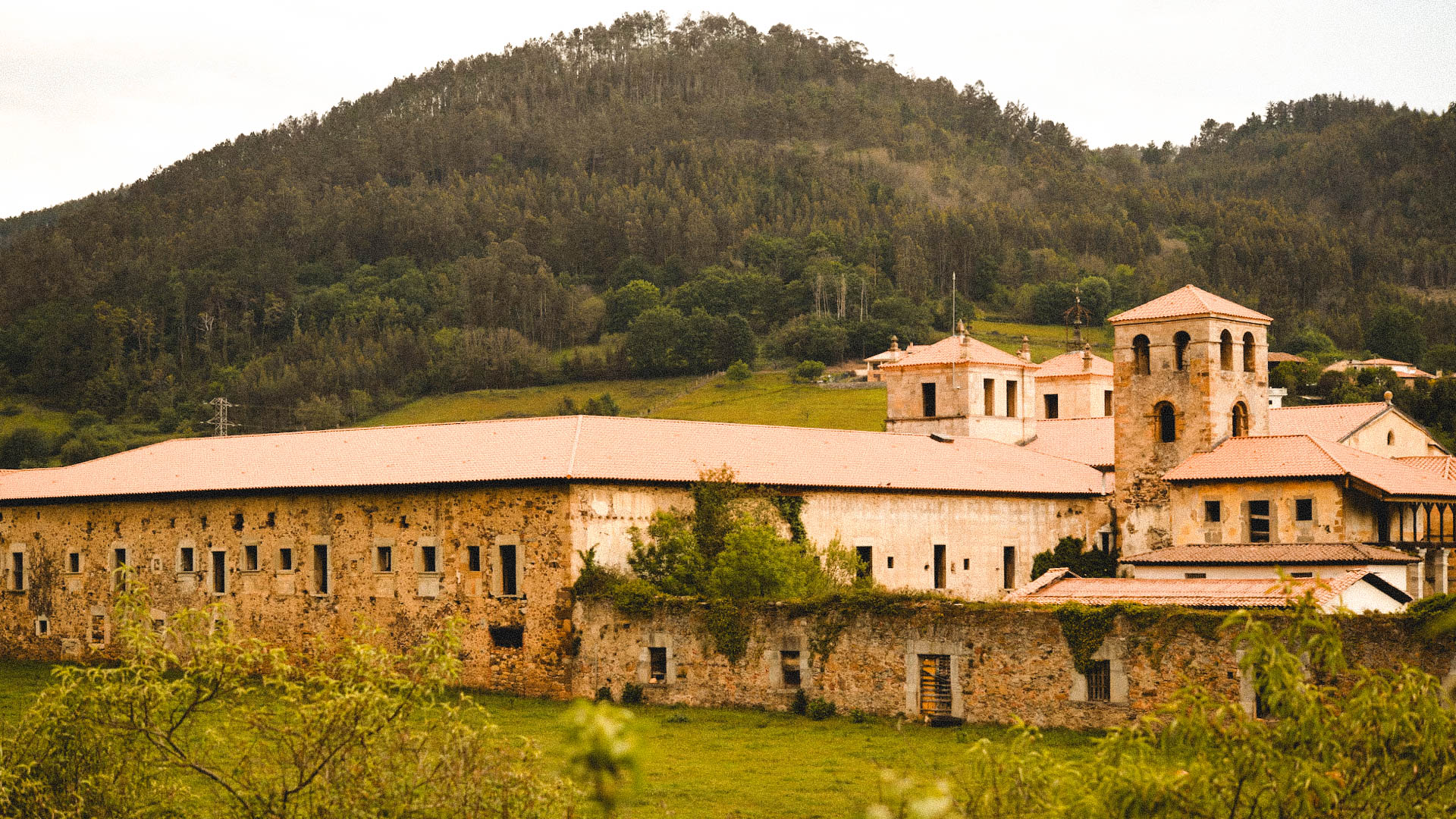
Along the way, you’ll pass charming villages like San Marcelo and Doriga, home to the 15th-century Doriga Palace, an imposing historical landmark. In Cornellana, the Monastery of San Salvador stands out, a site deeply connected to the Camino de Santiago. The journey ends in Salas, where its medieval old town invites pilgrims to explore cobbled streets and admire the Tower and Palace of Valdés Salas.

Gastronomy remains a highlight of this stage. In Grado and Salas, you can savor homemade cured meats, the traditional fabada asturiana, and the region’s signature sweet: Carajitos del Profesor, delicious hazelnut cookies. A demanding but rewarding journey, where history and nature go hand in hand.
In the heart of the Primitive Way

Distance: 12,3 miles – 19,8 km

The stage between Salas and Tineo is a mid-mountain journey featuring breathtaking landscapes. From Salas, the trail gradually ascends through rural paths, surrounded by chestnut and oak forests, offering panoramic views of the Asturian valleys.

Along the way, pilgrims pass through small villages like Porciles and La Espina, the latter being a historic crossroads where many choose to take a break. Further ahead, the path winds through remote landscapes before reaching Tineo, a town with a strong Jacobean heritage. Its medieval old town preserves its historic charm, with the Monastery of San Francisco standing out as a key landmark on the route.

Local gastronomy is another highlight of this stage. In Tineo, trying chosco, a traditional cured meat with a protected designation of origin, is a must, best enjoyed with a glass of asturian cider. For dessert, don’t miss freisuelos a delicious Asturian version of crêpes.
The authentic and wild path to Borres

Distance: 9,9 miles – 15,9 km

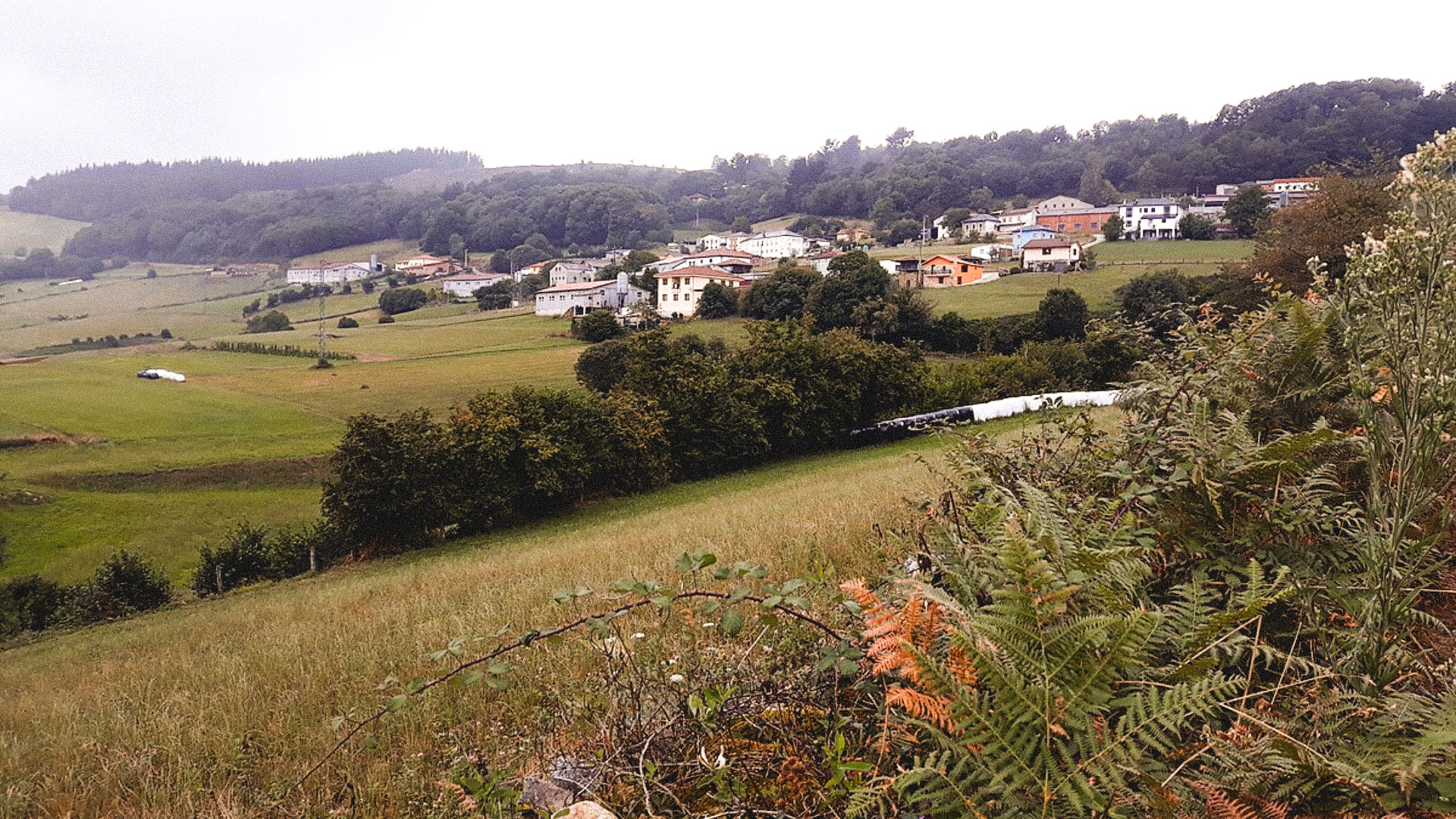
This stage is short but intense. The landscape becomes increasingly rugged and remote. From Tineo, the trail gradually ascends through meadows and oak forests, offering breathtaking views of the Asturian mountains. The sense of isolation deepens, preparing pilgrims for the challenging yet magical landscapes that lie ahead in the coming days.

Along the way, the route passes through villages like Vega del Rey and Campiello, where warm hospitality and lively pilgrim-friendly bars can be found. Shortly before reaching Borres, pilgrims pass the Monastery of Santa María la Real de Obona, a former Benedictine enclave that was once an important cultural and spiritual center on the Camino Primitivo. Despite its small size, Borres is a key stop for those preparing to follow the legendary Ruta de los Hospitales the next day.

As for gastronomy, this stage offers some of the best homemade Asturian cuisine. In Campiello and Borres, pilgrims can enjoy hearty dishes such as cachopo, slow-cooked meat stews, and pote asturiano, perfect for replenishing energy before the next challenge.
The most breathtaking stage of your Way

Distance: 15 miles – 24,1 km

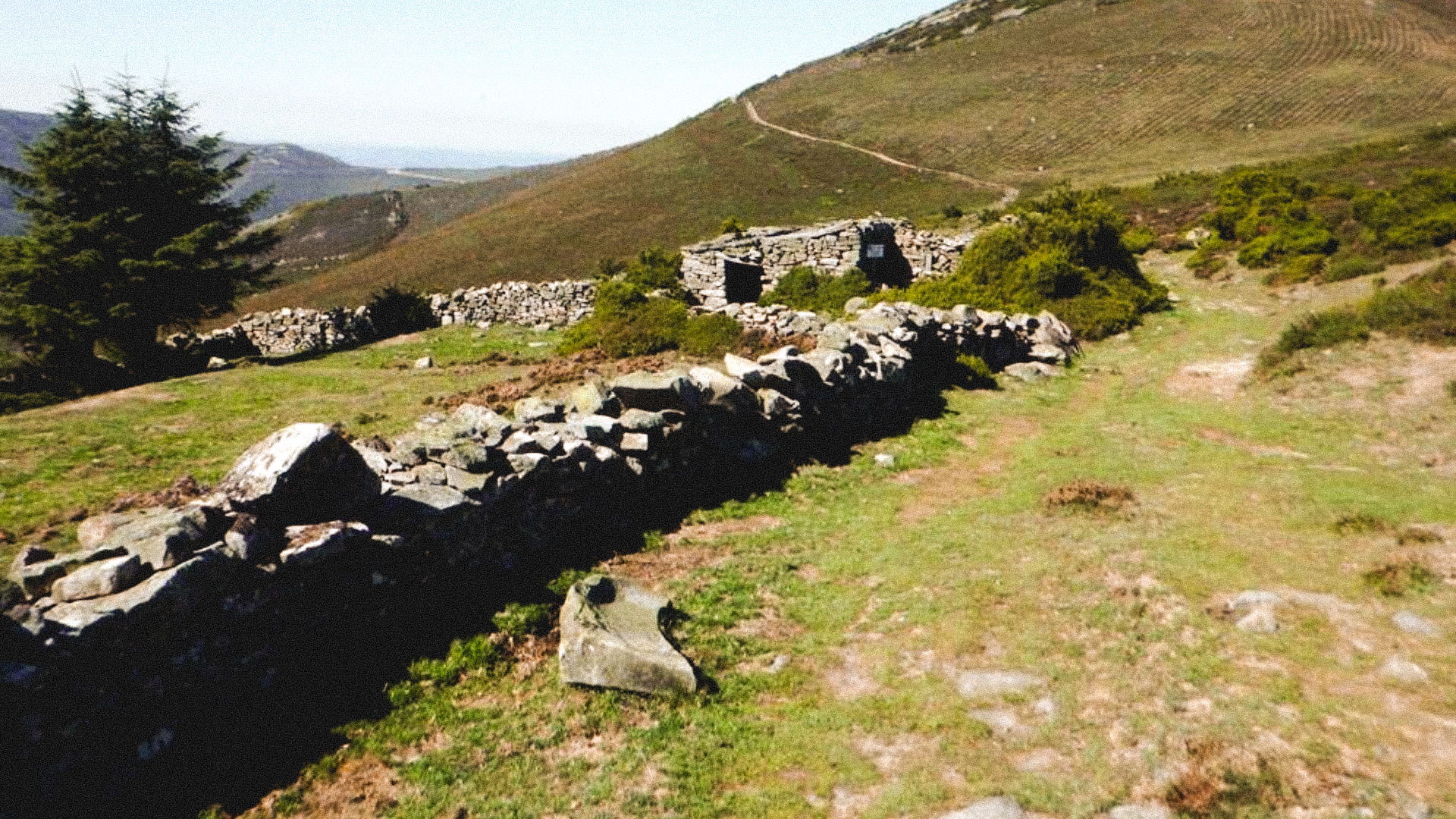
One of the most spectacular and challenging stages of the Primitive Way. The Ruta de los Hospitales crosses high mountain landscapes, leaving civilization behind and entering a remote, untouched wilderness. From Borres, the ascent is constant, winding through meadows and mountains until reaching the ancient ruins of pilgrim hospitals, such as La Paradiella and Valparaíso, silent witnesses to a past of refuge and survival.

The trail continues along the mountain ridge, offering breathtaking views of the Cantabrian Mountains and the feeling of walking on the roof of Asturias. There are no villages or services for most of the route, enhancing the solitude and adventurous spirit of this stage. After reaching the highest point, a demanding descent leads to Montefurado and later Berrucedo, a small rural hamlet where tranquility and warm hospitality mark the end of the day.

From a gastronomic perspective, the physical challenge of this stage is rewarded with hearty Asturian cuisine. In Berrucedo and nearby villages, pilgrims can recharge with pote asturiano, cordero a la estaca (grilled lamb), or a comforting fabada, always accompanied by a refreshing Asturian cider.
A journey through peaks and reservoirs

Distance:  12,7 miles – 20,4 km
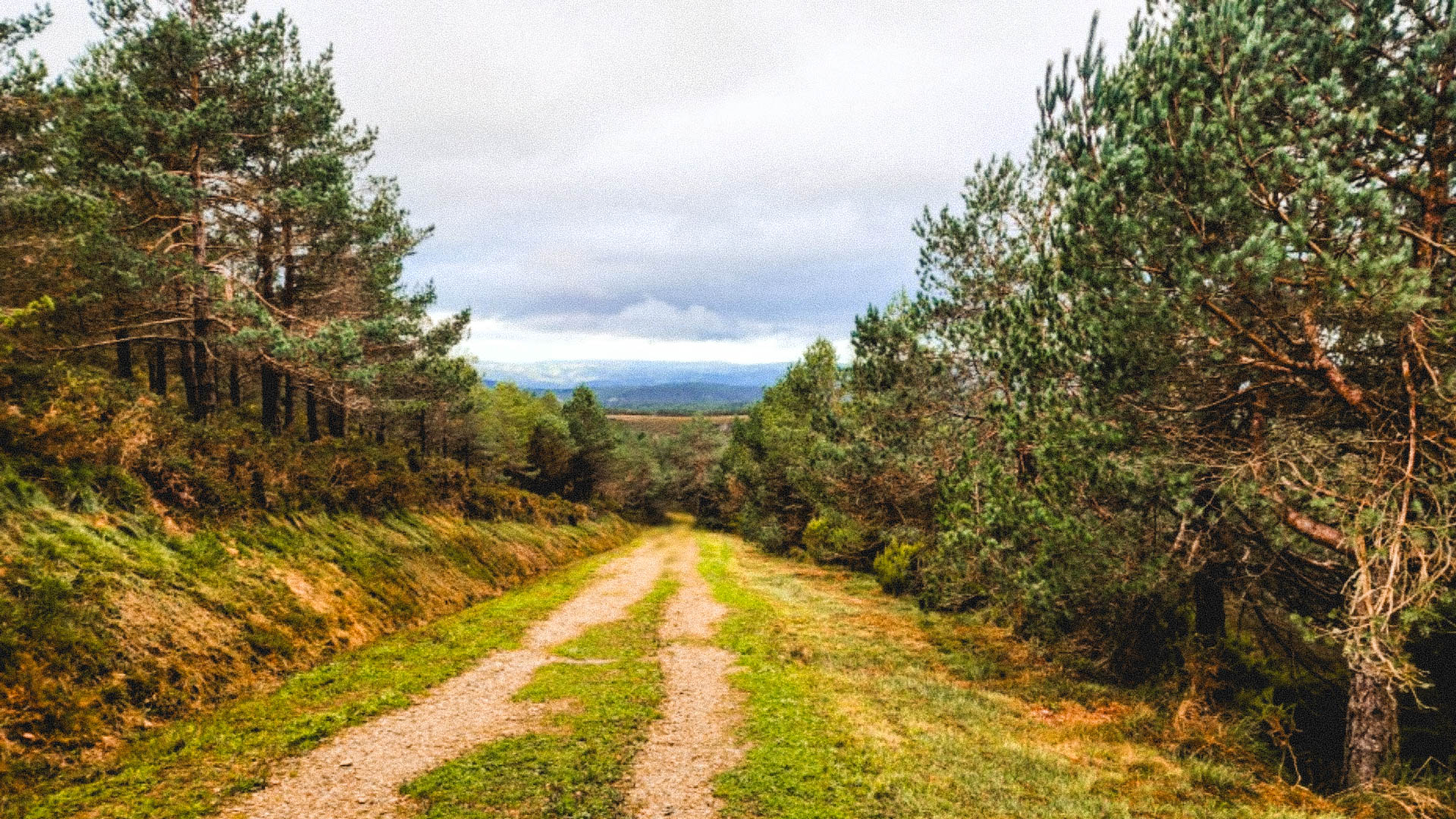
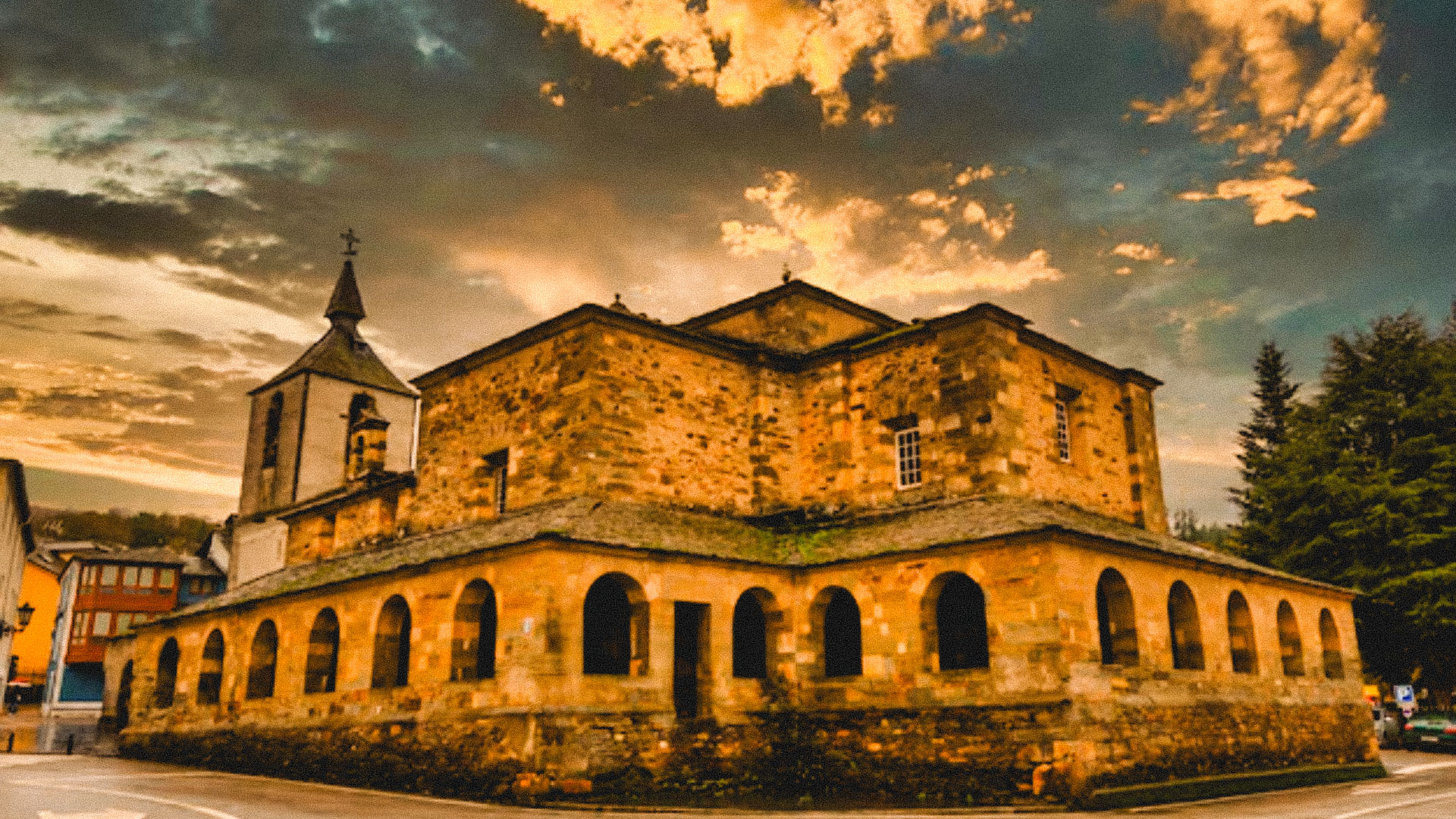
The stage between Berducedo and Grandas de Salime is one of contrasts, combining open mountain summits with a spectacular descent toward the Salime Reservoir. After leaving Berducedo, the trail winds through breathtaking mountain landscapes, passing through La Mesa, the last settlement before the long descent into the valley. On clear days, the panoramic view over the reservoir is truly stunning, with the water reflecting the surrounding mountains.

The descent to Salime is one of the most demanding on the Camino Primitivo, with steep sections that require caution. As elevation decreases, the scenery transforms, with lush forests and the reservoir dominating the horizon. Shortly after crossing the dam, the final climb begins toward Grandas de Salime, a lively town with a strong Jacobean tradition. Highlights include the Church of San Salvador and the Ethnographic Museum, which offers insight into the region’s history and traditions.

After such an intense stage, gastronomy becomes the ultimate reward. In Grandas de Salime, pilgrims can enjoy classic Asturian dishes such as cabrito guisado (stewed goat), ternera asturiana (asturian beef ) and the delicious anise-flavored roscos.

Entering Galicia

Distance: 15,7 miles – 25,2 km

This stage marks a milestone on the Camino Primitivo: crossing the border between Asturias and Galicia. From Grandas de Salime, the ascent is gradual until reaching Alto del Acebo (40 k inches – 1,030 m), where pilgrims can enjoy breathtaking panoramic views. Arriving in Galicia brings noticeable landscape changes, with rolling mountains and timeless stone villages.

The route passes through small hamlets like Peñafuente and Barbeitos, before reaching A Fonsagrada, one of the most iconic towns on the Camino. Here, pilgrims can visit the Church of Santa María and the legendary Fons Sacrata, the sacred fountain that gives the town its name and is believed to have miraculous properties.

From a gastronomic perspective, the local specialty is butelo, a traditional Galician cured sausage, along with the famous Tarta de A Fonsagrada. After a day of demanding climbs and unforgettable landscapes, entering Galicia marks the beginning of a new phase in the pilgrimage.
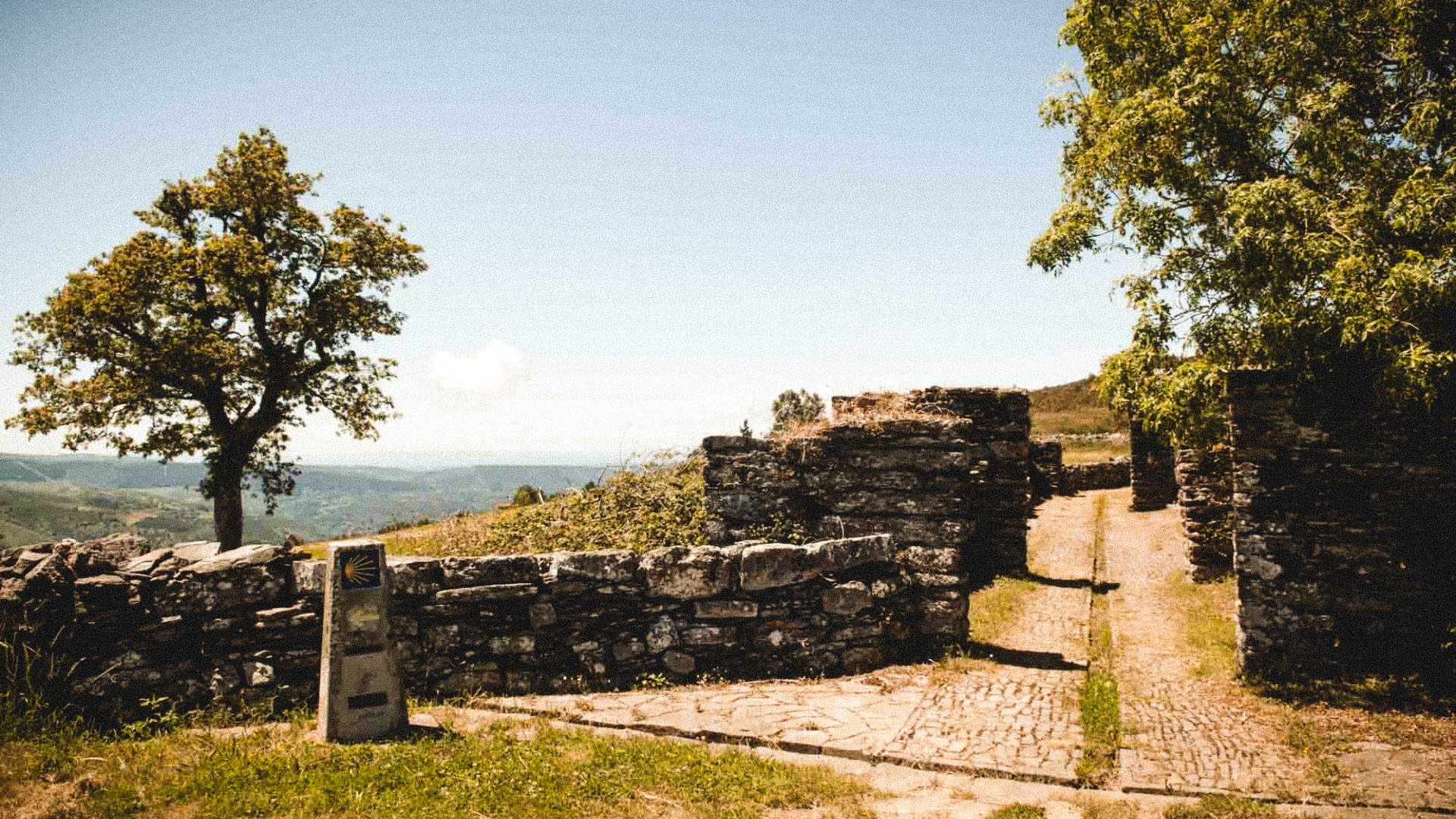
A journey through mountains, history and reflection

Distance: 15,1 miles – 24,3 km

The stage between A Fonsagrada and O Cádavo continues through mountainous terrain, with constant ascents and descents. Early on, the ascent to Montouto takes pilgrims to the ruins of an ancient pilgrim hospital, a poignant reminder of the Camino’s medieval past.

The route winds through rural areas and forests, passing through quiet villages like Padrón and Vilardongo, where the slow rhythm of rural life accompanies the journey. The arrival in O Cádavo is marked by the final climb to Alto de A Fontaneira, a last challenge before descending into the town.

In O Cádavo, gastronomy is once again a highlight. Pilgrims can enjoy hearty Galician dishes such as caldo gallego, lacón con grelos, and the traditional galician empanada, perfect for replenishing energy after a demanding day.
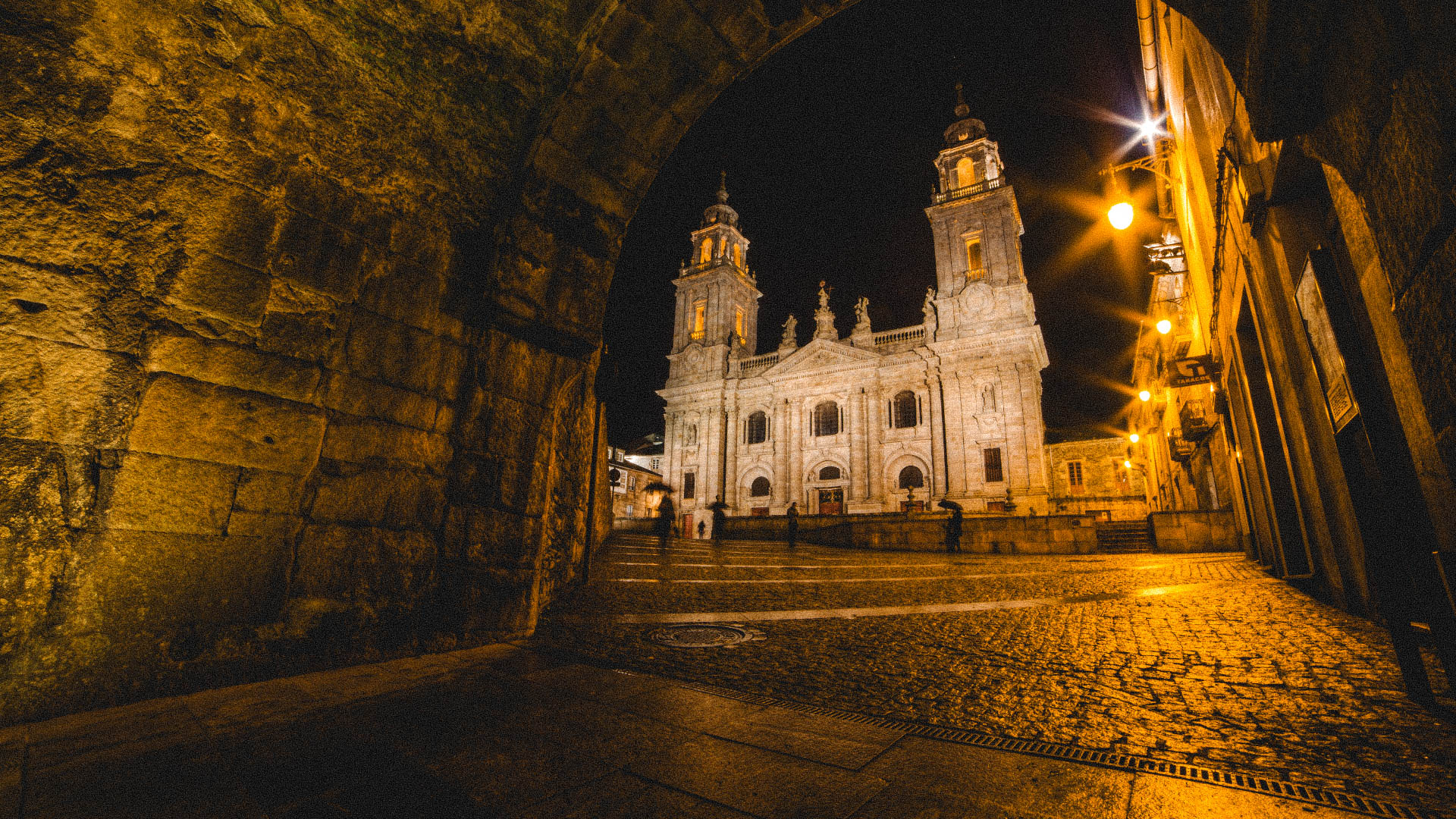
Towards the walled city

Distance: 18,3 miles – 29,5 km

This stage is longer but features a gentler profile. From O Cádavo, the trail follows a pleasant descent to Castroverde, where pilgrims can visit the Church of Santiago and the ruins of its medieval castle. From this point, rural paths give way to more open trails, signaling the approach to Lugo.

Arriving in Lugo is a special moment on the Camino Primitivo. This is the largest city on the route and boasts an impressive heritage, especially its Roman Wall, a UNESCO World Heritage Site. Other highlights include the Cathedral of Santa María and the vibrant historic center.

Lugo is famous for its gastronomy, and a must-do is stopping at its tapas bars, where you can try pulpo a feira (Galician-style octopus), callos a la gallega (Galician-style tripe), and fresh seafood. A transition stage, but one filled with history and excellent cuisine.
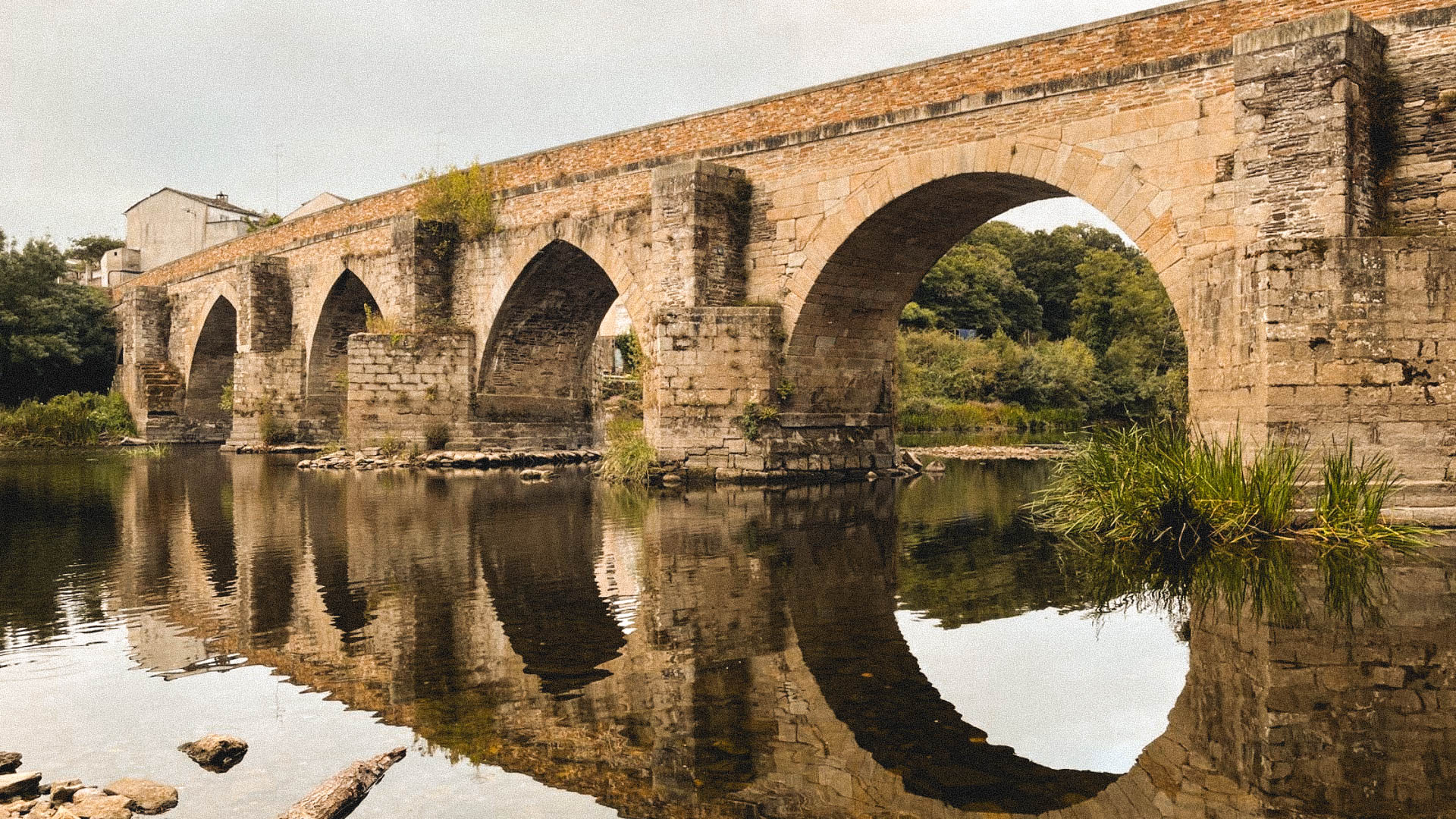
Walking through galician villages

Distance: 16,5 miles – 26,5 km

The stage between Lugo and Ferreira is a peaceful route that passes through small villages and rural landscapes. Leaving Lugo, the path quickly moves away from the city’s bustle and enters a more solitary environment, following trails lined with fields and forests.

Pilgrims will pass through villages like San Román and Pacio, where time seems to stand still. This stage does not feature major monuments, but its true charm lies in the sense of peace it provides, allowing pilgrims to connect with the purest essence of the Camino.

In Ferreira, gastronomy remains a highlight. Pilgrims can enjoy home-cooked dishes such as Galician churrasco, scallop empanada, and the traditional Tarta de Santiago. A simple stage, yet filled with a quiet beauty that leaves a lasting impression.
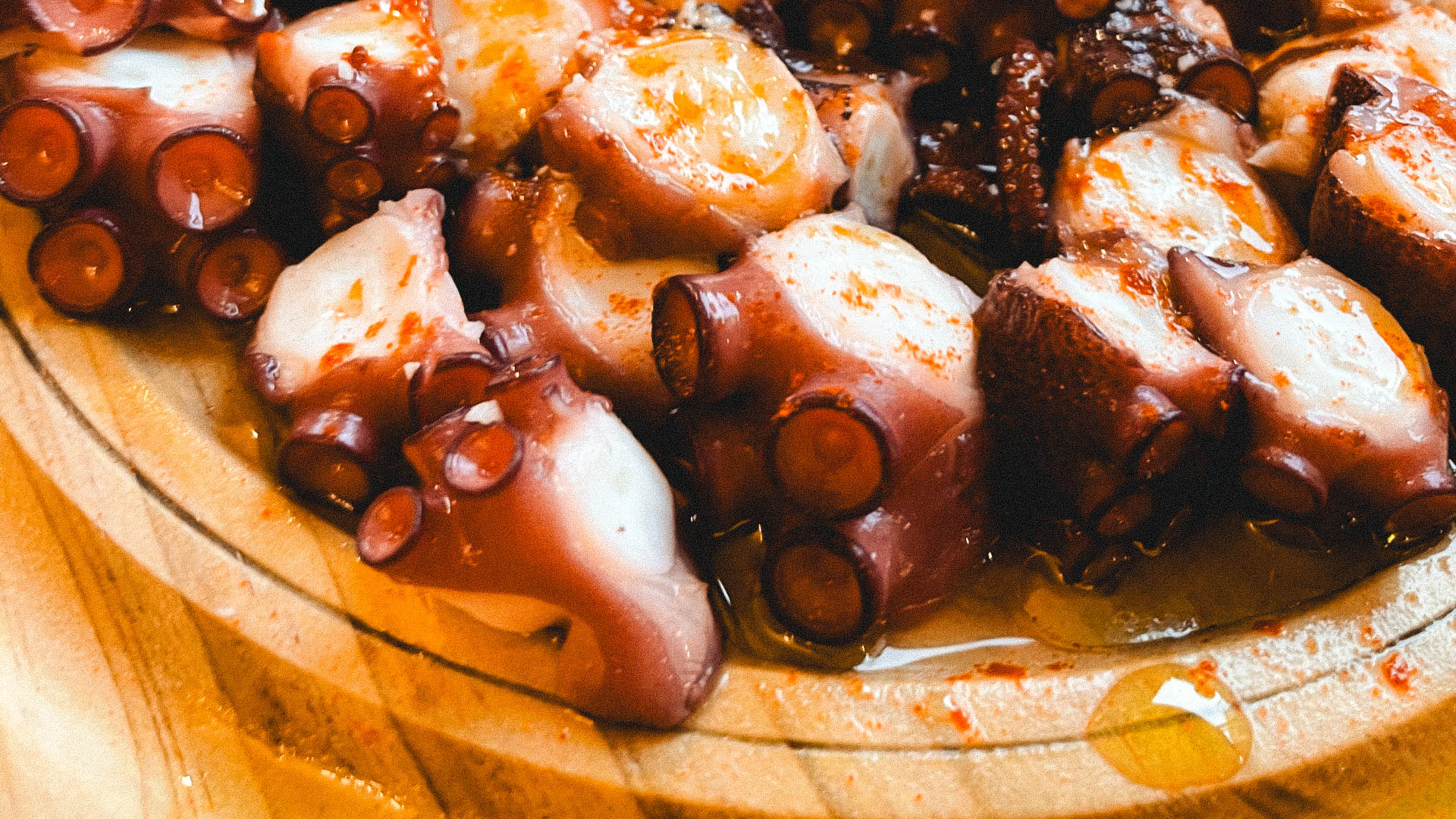
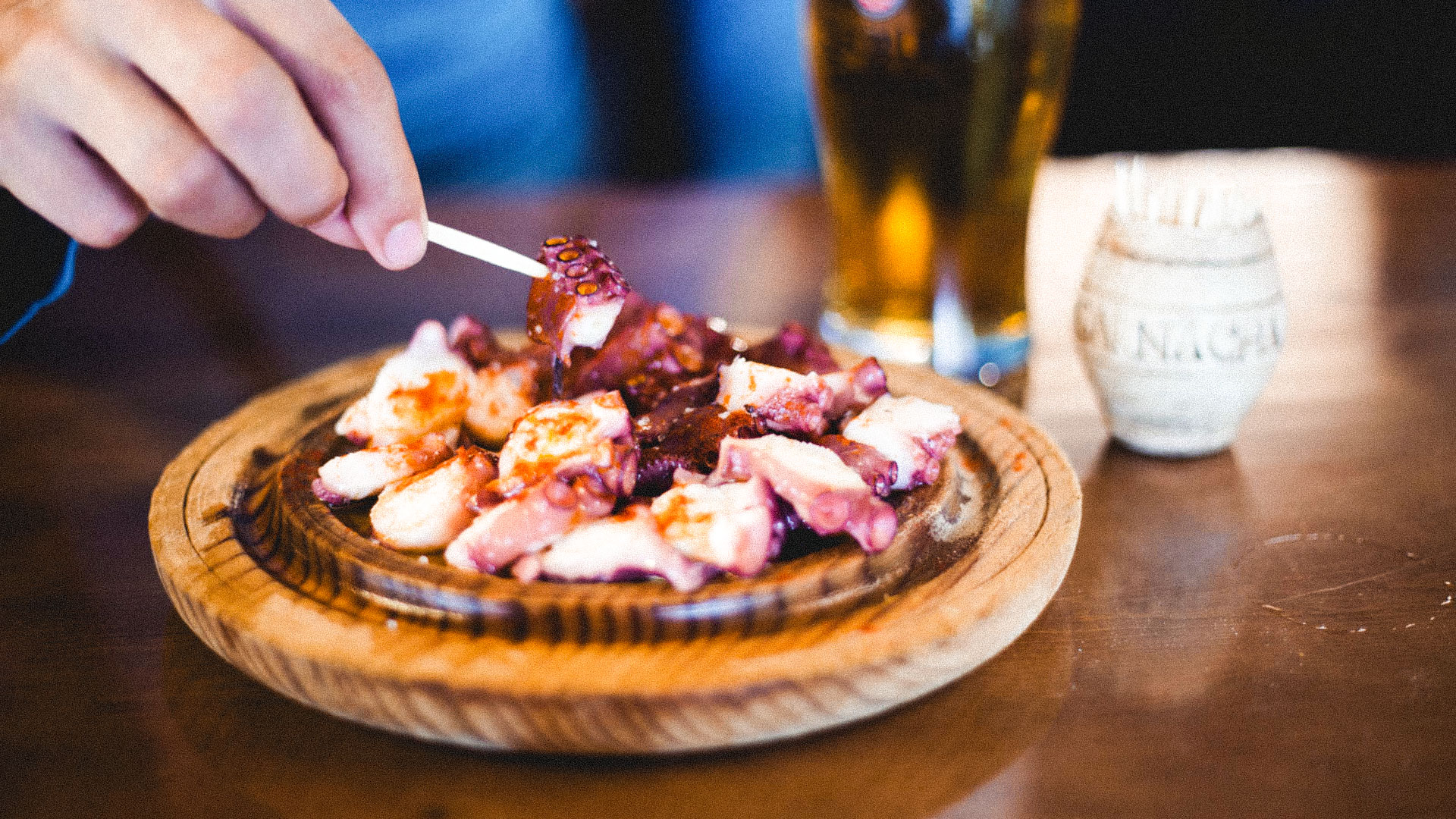
Plato de pulpo a la gallega con pimentón típico de Melide en la etapa Palas de Rei–MelideArriving at the crossroads of the Caminos

Distance: 12,4 miles – 20 km

This stage is short but significant, as in Melide, the Primitive Way merges with the French Way. The route continues through Galician villages, with the classic landscape of rolling green hills and dirt paths.

Melide is one of the most important gastronomic destinations on the Camino. Its signature dish is pulpo a feira, considered by many to be the best octopus in Galicia. In its traditional pulperías, pilgrims enjoy this delicacy accompanied by bread and wine.

This stage marks a turning point: from Melide onward, the Camino becomes busier, but also more festive, with a renewed energy as pilgrims walk together toward Santiago.
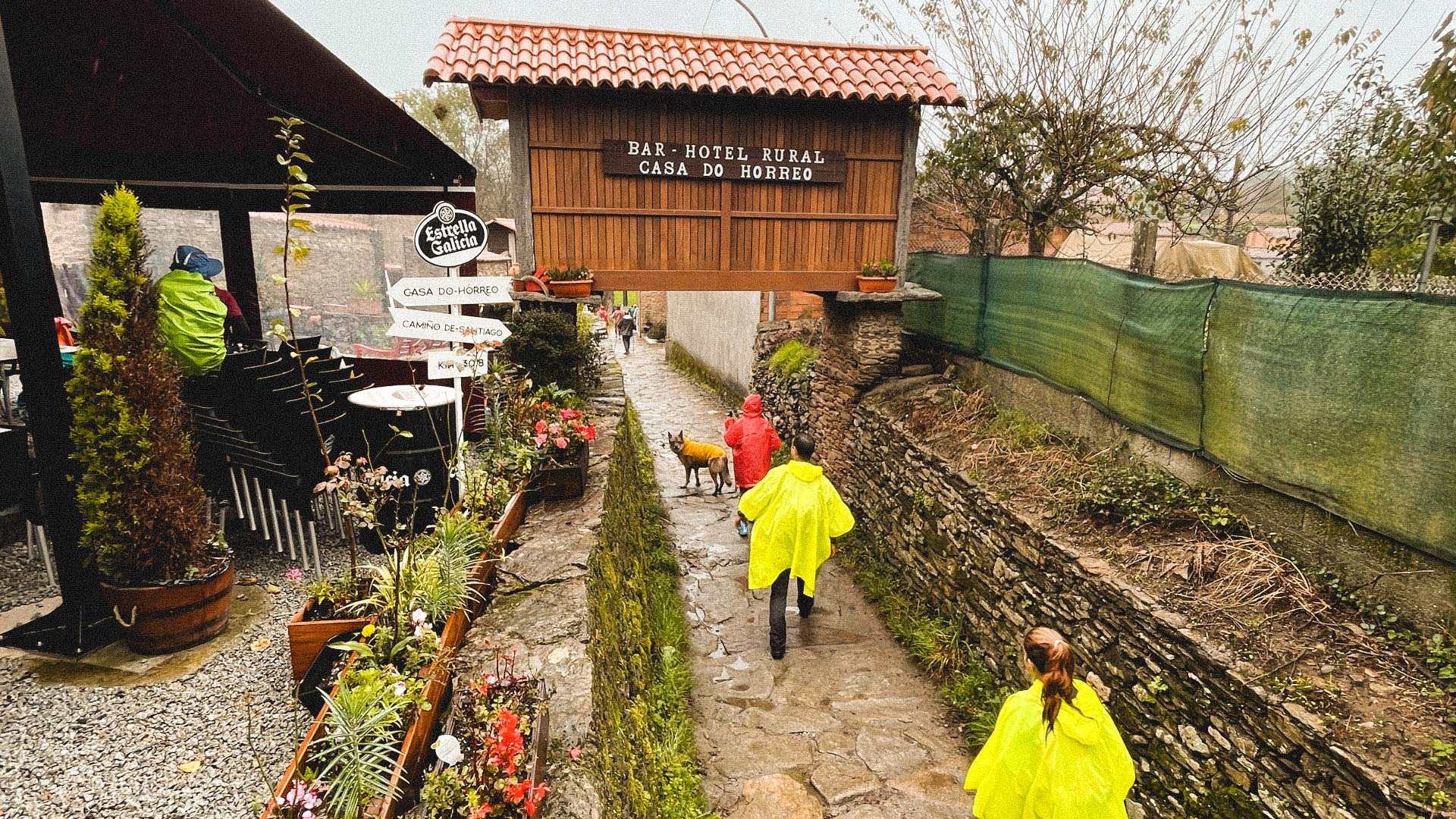
Hórreo a la entrada del hotel rural Casa do Hórreo en Ferreiros con peregrinos y naturaleza en un día encapotadoA journey through forests and exquisite Galician flavours

Distance: 13,4 miles – 21,6 km

This stage takes pilgrims through the wooded landscapes typical of Galicia’s interior. From Melide, the path winds through lush oak forests and small villages, where chapels and churches stand as reminders of the Camino’s centuries-old significance.

Pilgrims cross rivers over medieval bridges, enjoying a serene environment, with landmarks like the Church of Boente, where homage is paid to Saint James. As the journey nears A Calle de Ferreiros, the feeling of closeness to Santiago becomes increasingly tangible.

Gastronomy continues to delight pilgrims with local specialties such as Arzúa-Ulloa cheese, filloas (Galician crepes), and the ever-present Galician bread. A stage that allows travelers to savor the true essence of the Camino before the final stretch.
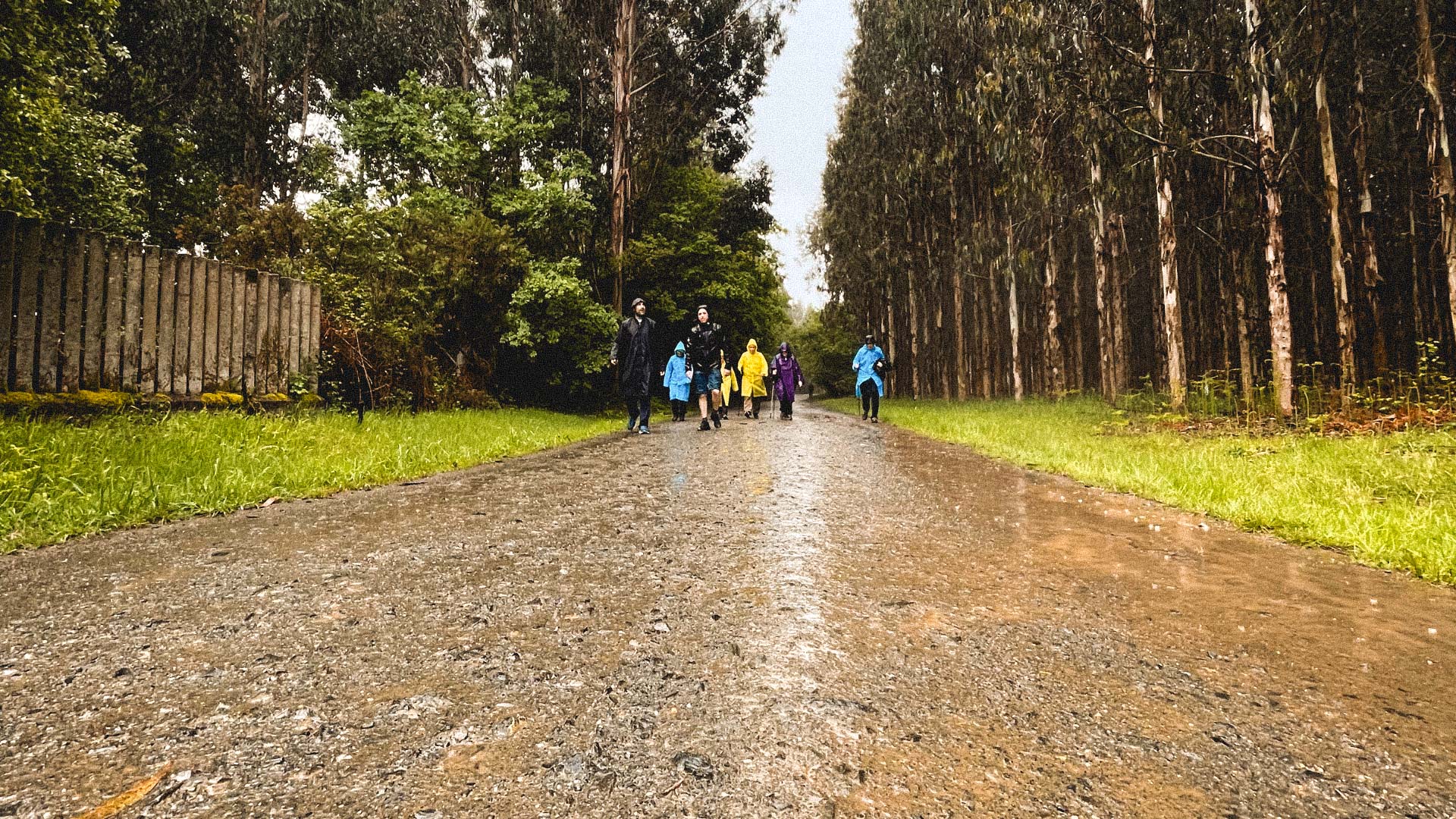
Peregrinos caminando por pista forestal de grava bajo la lluvia en el tramo hacia Lavacolla en el Camino de SantiagoThe countdown to Santiago

Distance: 13,2 miles – 21,3 km

The end of the journey is near. From A Calle de Ferreiros, the path winds through villages and gentle hills, with moderate but steady climbs. Excitement builds as Lavacolla, the last village before Santiago, comes into view.

Lavacolla holds special significance for pilgrims, as it was traditionally the place where they performed a ritual cleansing before entering the holy city. Today, it remains a key resting point before the final stretch.

The local cuisine stays true to Galician tradition, featuring dishes such as carne ao caldeiro (boiled beef), lacón con grelos (pork shoulder with turnip greens), and the delicious melindres (Galician glazed pastries). This stage is filled with the anticipation of arriving in Santiago, a feeling that grows stronger with every step.
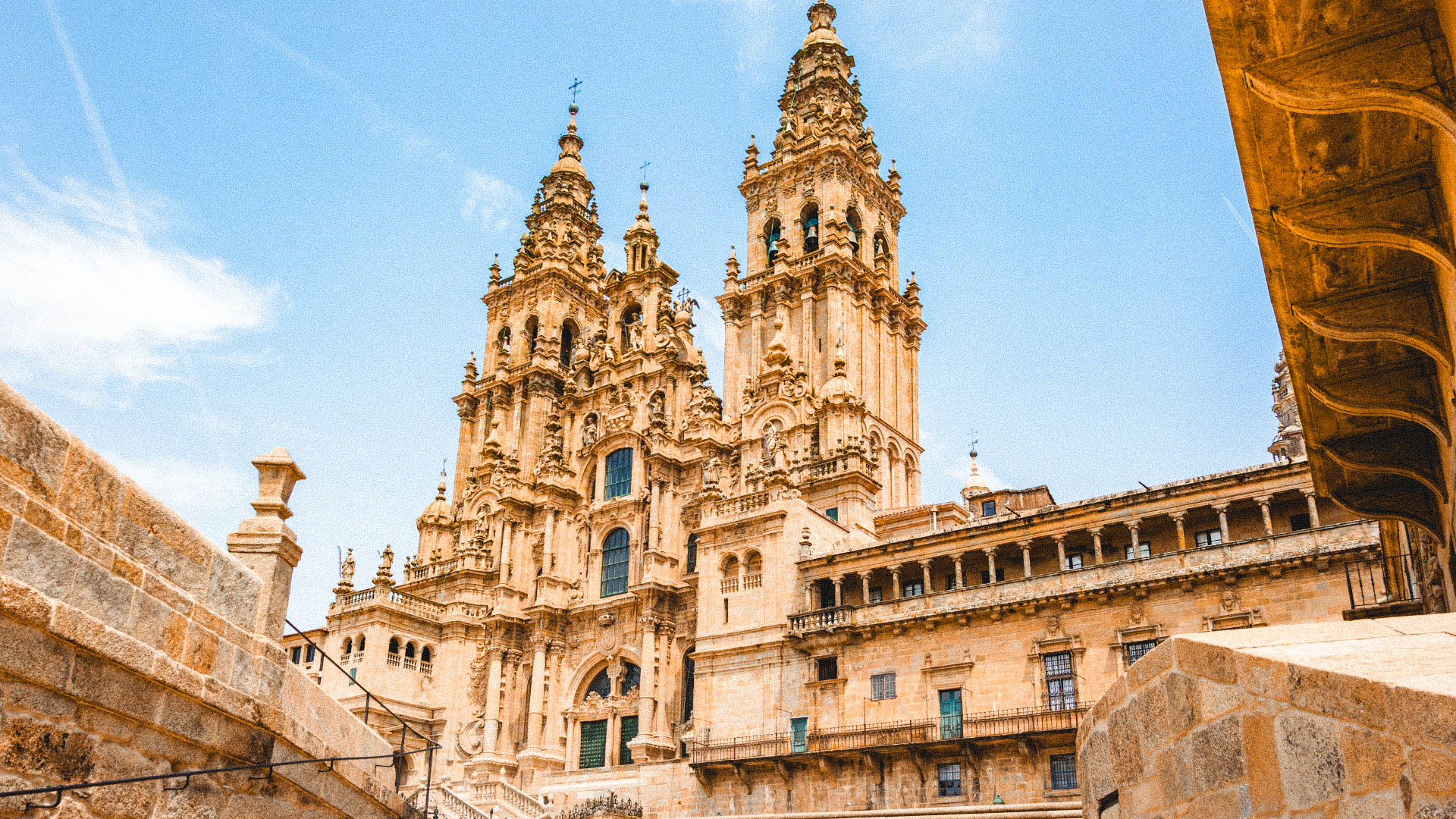
Fachada lateral de la Catedral de Santiago de Compostela vista desde la Plaza del Obradoiro en un día despejadoThe final goal and the embrace of the Saint

Distance: 6,2 miles – 10 km

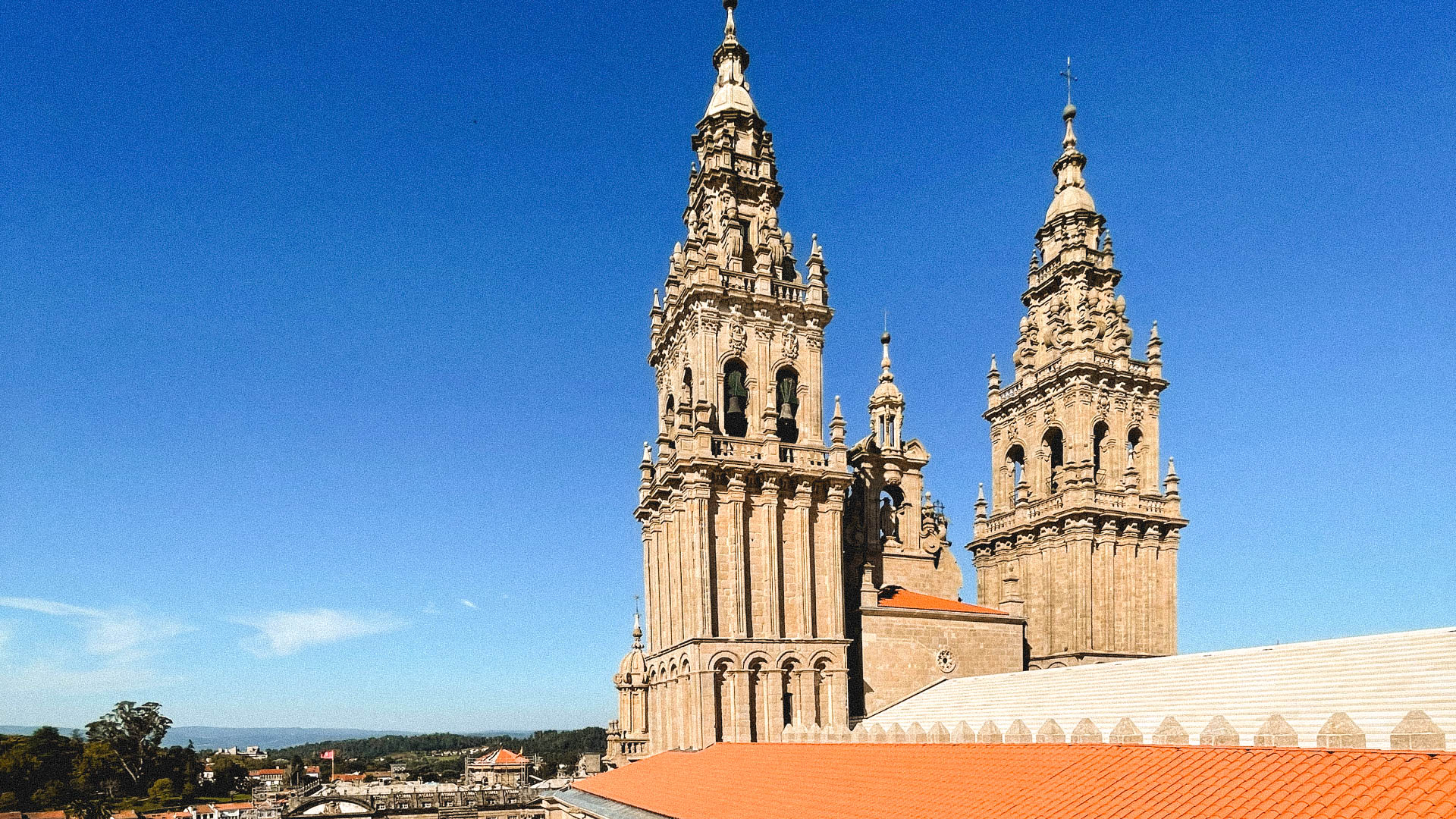
The last ten kilometers are a mix of emotion, exhaustion, and euphoria. From Lavacolla, the trail ascends to Monte do Gozo, where pilgrims catch their first glimpse of the Santiago Cathedral. This is a moment of celebration, where many pause to reflect on their journey.

The final descent leads through the streets of Santiago, crossing the Porta do Camiño and entering the historic center. Arriving at Praza do Obradoiro is indescribable, the majestic Cathedral stands tall, welcoming each pilgrim after their long journey.

After all the effort, it’s time for reward. In Santiago, fresh seafood, Galician beef, and the iconic Tarta de Santiago provide the perfect way to end this unforgettable experience.

Here, the Camino ends, but its mark remains forever in the soul of every pilgrim. Don’t miss this incredible Way!

Route

1
Oviedo - Grado

Jose Mari posando frente a la Catedral de San Salvador de Oviedo en un día nubladoThe beginning of your own Primitive Way

Distance: 15,7 miles – 25,2 km

The first stage offers a mix of urban settings, forests, and rolling green hills, characteristic of Asturias. Starting from the Cathedral of San Salvador, the route takes you through rural paths and small roads, with challenging ascents, such as the climb to Escamplero.

Along the way, you’ll pass through historic villages like San Lázaro de Paniceres, Loriana, and Peñaflor, home to a medieval bridge over the Nalón River. Another highlight is the Chapel of Santa María de Valsera, a perfect spot for a short rest. The stage ends in Grado, a lively town known for its traditional market and welcoming atmosphere.

Gastronomy is a key part of this stage. Asturian cider, Afuega’l Pitu cheese, and hearty fabada asturiana provide the perfect energy boost. In Grado, don’t miss the famous “tocinillos de cielo” a delicious traditional dessert. With its blend of landscapes, history, and local flavors, this stage is a perfect introduction to the Camino Primitivo.

2
Grado - Salas

Nature, history and northern flavours

Distance: 13,9 miles – 22,3 km

The stage between Grado and Salas winds through green hills, valleys, and forested sections, showcasing the typical Asturian landscape. While not excessively difficult, it features continuous climbs, such as the ascent to Venta del Escamplero, and technical descents that require caution. The route follows a mix of rural paths and small roads, offering a peaceful and enjoyable walk.

Along the way, you’ll pass charming villages like San Marcelo and Doriga, home to the 15th-century Doriga Palace, an imposing historical landmark. In Cornellana, the Monastery of San Salvador stands out, a site deeply connected to the Camino de Santiago. The journey ends in Salas, where its medieval old town invites pilgrims to explore cobbled streets and admire the Tower and Palace of Valdés Salas.

Gastronomy remains a highlight of this stage. In Grado and Salas, you can savor homemade cured meats, the traditional fabada asturiana, and the region’s signature sweet: Carajitos del Profesor, delicious hazelnut cookies. A demanding but rewarding journey, where history and nature go hand in hand.

3
Salas -Tineo

In the heart of the Primitive Way

Distance: 12,3 miles – 19,8 km

The stage between Salas and Tineo is a mid-mountain journey featuring breathtaking landscapes. From Salas, the trail gradually ascends through rural paths, surrounded by chestnut and oak forests, offering panoramic views of the Asturian valleys.

Along the way, pilgrims pass through small villages like Porciles and La Espina, the latter being a historic crossroads where many choose to take a break. Further ahead, the path winds through remote landscapes before reaching Tineo, a town with a strong Jacobean heritage. Its medieval old town preserves its historic charm, with the Monastery of San Francisco standing out as a key landmark on the route.

Local gastronomy is another highlight of this stage. In Tineo, trying chosco, a traditional cured meat with a protected designation of origin, is a must, best enjoyed with a glass of asturian cider. For dessert, don’t miss freisuelos a delicious Asturian version of crêpes.

4
Tineo - Borres

The authentic and wild path to Borres

Distance: 9,9 miles – 15,9 km

This stage is short but intense. The landscape becomes increasingly rugged and remote. From Tineo, the trail gradually ascends through meadows and oak forests, offering breathtaking views of the Asturian mountains. The sense of isolation deepens, preparing pilgrims for the challenging yet magical landscapes that lie ahead in the coming days.

Along the way, the route passes through villages like Vega del Rey and Campiello, where warm hospitality and lively pilgrim-friendly bars can be found. Shortly before reaching Borres, pilgrims pass the Monastery of Santa María la Real de Obona, a former Benedictine enclave that was once an important cultural and spiritual center on the Camino Primitivo. Despite its small size, Borres is a key stop for those preparing to follow the legendary Ruta de los Hospitales the next day.

As for gastronomy, this stage offers some of the best homemade Asturian cuisine. In Campiello and Borres, pilgrims can enjoy hearty dishes such as cachopo, slow-cooked meat stews, and pote asturiano, perfect for replenishing energy before the next challenge.

5
Borres (Hospitales route) - Berducedo

The most breathtaking stage of your Way

Distance: 15 miles – 24,1 km

One of the most spectacular and challenging stages of the Primitive Way. The Ruta de los Hospitales crosses high mountain landscapes, leaving civilization behind and entering a remote, untouched wilderness. From Borres, the ascent is constant, winding through meadows and mountains until reaching the ancient ruins of pilgrim hospitals, such as La Paradiella and Valparaíso, silent witnesses to a past of refuge and survival.

The trail continues along the mountain ridge, offering breathtaking views of the Cantabrian Mountains and the feeling of walking on the roof of Asturias. There are no villages or services for most of the route, enhancing the solitude and adventurous spirit of this stage. After reaching the highest point, a demanding descent leads to Montefurado and later Berrucedo, a small rural hamlet where tranquility and warm hospitality mark the end of the day.

From a gastronomic perspective, the physical challenge of this stage is rewarded with hearty Asturian cuisine. In Berrucedo and nearby villages, pilgrims can recharge with pote asturiano, cordero a la estaca (grilled lamb), or a comforting fabada, always accompanied by a refreshing Asturian cider.

6
Berducedo - Grandas de Salime

A journey through peaks and reservoirs

Distance:  12,7 miles – 20,4 km

The stage between Berducedo and Grandas de Salime is one of contrasts, combining open mountain summits with a spectacular descent toward the Salime Reservoir. After leaving Berducedo, the trail winds through breathtaking mountain landscapes, passing through La Mesa, the last settlement before the long descent into the valley. On clear days, the panoramic view over the reservoir is truly stunning, with the water reflecting the surrounding mountains.

The descent to Salime is one of the most demanding on the Camino Primitivo, with steep sections that require caution. As elevation decreases, the scenery transforms, with lush forests and the reservoir dominating the horizon. Shortly after crossing the dam, the final climb begins toward Grandas de Salime, a lively town with a strong Jacobean tradition. Highlights include the Church of San Salvador and the Ethnographic Museum, which offers insight into the region’s history and traditions.

After such an intense stage, gastronomy becomes the ultimate reward. In Grandas de Salime, pilgrims can enjoy classic Asturian dishes such as cabrito guisado (stewed goat), ternera asturiana (asturian beef ) and the delicious anise-flavored roscos.

7
Gradas de Salime - A Fonsagrada

Entering Galicia

Distance: 15,7 miles – 25,2 km

This stage marks a milestone on the Camino Primitivo: crossing the border between Asturias and Galicia. From Grandas de Salime, the ascent is gradual until reaching Alto del Acebo (40 k inches – 1,030 m), where pilgrims can enjoy breathtaking panoramic views. Arriving in Galicia brings noticeable landscape changes, with rolling mountains and timeless stone villages.

The route passes through small hamlets like Peñafuente and Barbeitos, before reaching A Fonsagrada, one of the most iconic towns on the Camino. Here, pilgrims can visit the Church of Santa María and the legendary Fons Sacrata, the sacred fountain that gives the town its name and is believed to have miraculous properties.

From a gastronomic perspective, the local specialty is butelo, a traditional Galician cured sausage, along with the famous Tarta de A Fonsagrada. After a day of demanding climbs and unforgettable landscapes, entering Galicia marks the beginning of a new phase in the pilgrimage.

8
A Fonsagrada - O Cádavo

A journey through mountains, history and reflection

Distance: 15,1 miles – 24,3 km

The stage between A Fonsagrada and O Cádavo continues through mountainous terrain, with constant ascents and descents. Early on, the ascent to Montouto takes pilgrims to the ruins of an ancient pilgrim hospital, a poignant reminder of the Camino’s medieval past.

The route winds through rural areas and forests, passing through quiet villages like Padrón and Vilardongo, where the slow rhythm of rural life accompanies the journey. The arrival in O Cádavo is marked by the final climb to Alto de A Fontaneira, a last challenge before descending into the town.

In O Cádavo, gastronomy is once again a highlight. Pilgrims can enjoy hearty Galician dishes such as caldo gallego, lacón con grelos, and the traditional galician empanada, perfect for replenishing energy after a demanding day.

9
O Cádavo - Lugo

Towards the walled city

Distance: 18,3 miles – 29,5 km

This stage is longer but features a gentler profile. From O Cádavo, the trail follows a pleasant descent to Castroverde, where pilgrims can visit the Church of Santiago and the ruins of its medieval castle. From this point, rural paths give way to more open trails, signaling the approach to Lugo.

Arriving in Lugo is a special moment on the Camino Primitivo. This is the largest city on the route and boasts an impressive heritage, especially its Roman Wall, a UNESCO World Heritage Site. Other highlights include the Cathedral of Santa María and the vibrant historic center.

Lugo is famous for its gastronomy, and a must-do is stopping at its tapas bars, where you can try pulpo a feira (Galician-style octopus), callos a la gallega (Galician-style tripe), and fresh seafood. A transition stage, but one filled with history and excellent cuisine.

10
Lugo - A Ponte Ferreira

Walking through galician villages

Distance: 16,5 miles – 26,5 km

The stage between Lugo and Ferreira is a peaceful route that passes through small villages and rural landscapes. Leaving Lugo, the path quickly moves away from the city’s bustle and enters a more solitary environment, following trails lined with fields and forests.

Pilgrims will pass through villages like San Román and Pacio, where time seems to stand still. This stage does not feature major monuments, but its true charm lies in the sense of peace it provides, allowing pilgrims to connect with the purest essence of the Camino.

In Ferreira, gastronomy remains a highlight. Pilgrims can enjoy home-cooked dishes such as Galician churrasco, scallop empanada, and the traditional Tarta de Santiago. A simple stage, yet filled with a quiet beauty that leaves a lasting impression.

11
A Ponte Ferreira - Melide

Plato de pulpo a la gallega con pimentón típico de Melide en la etapa Palas de Rei–MelideArriving at the crossroads of the Caminos

Distance: 12,4 miles – 20 km

This stage is short but significant, as in Melide, the Primitive Way merges with the French Way. The route continues through Galician villages, with the classic landscape of rolling green hills and dirt paths.

Melide is one of the most important gastronomic destinations on the Camino. Its signature dish is pulpo a feira, considered by many to be the best octopus in Galicia. In its traditional pulperías, pilgrims enjoy this delicacy accompanied by bread and wine.

This stage marks a turning point: from Melide onward, the Camino becomes busier, but also more festive, with a renewed energy as pilgrims walk together toward Santiago.

12
Melide - A Calle de Ferreiros

Hórreo a la entrada del hotel rural Casa do Hórreo en Ferreiros con peregrinos y naturaleza en un día encapotadoA journey through forests and exquisite Galician flavours

Distance: 13,4 miles – 21,6 km

This stage takes pilgrims through the wooded landscapes typical of Galicia’s interior. From Melide, the path winds through lush oak forests and small villages, where chapels and churches stand as reminders of the Camino’s centuries-old significance.

Pilgrims cross rivers over medieval bridges, enjoying a serene environment, with landmarks like the Church of Boente, where homage is paid to Saint James. As the journey nears A Calle de Ferreiros, the feeling of closeness to Santiago becomes increasingly tangible.

Gastronomy continues to delight pilgrims with local specialties such as Arzúa-Ulloa cheese, filloas (Galician crepes), and the ever-present Galician bread. A stage that allows travelers to savor the true essence of the Camino before the final stretch.

13
A Calle de Ferreiros - Lavacolla

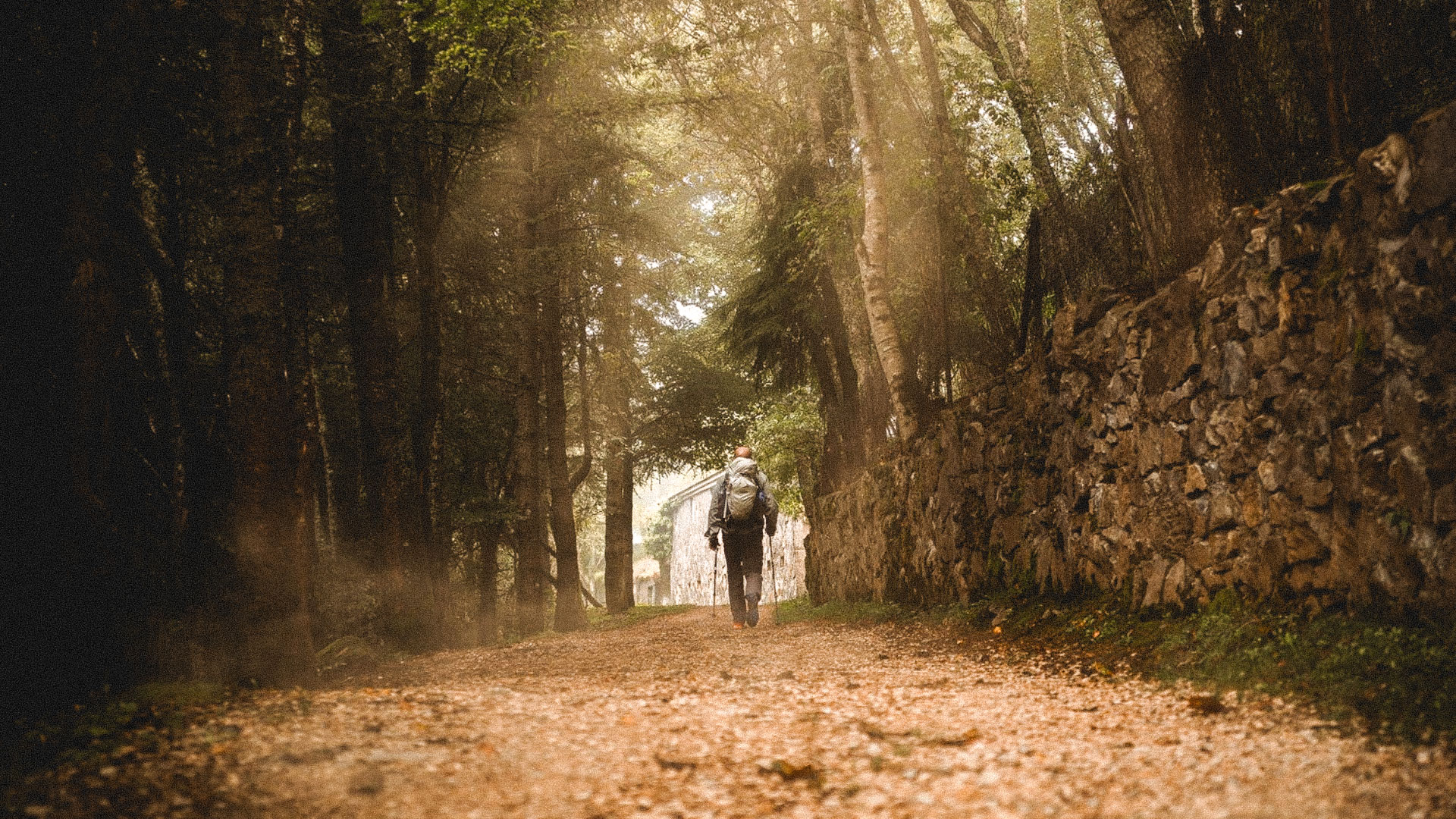
Peregrinos caminando por pista forestal de grava bajo la lluvia en el tramo hacia Lavacolla en el Camino de SantiagoThe countdown to Santiago

Distance: 13,2 miles – 21,3 km

The end of the journey is near. From A Calle de Ferreiros, the path winds through villages and gentle hills, with moderate but steady climbs. Excitement builds as Lavacolla, the last village before Santiago, comes into view.

Lavacolla holds special significance for pilgrims, as it was traditionally the place where they performed a ritual cleansing before entering the holy city. Today, it remains a key resting point before the final stretch.

The local cuisine stays true to Galician tradition, featuring dishes such as carne ao caldeiro (boiled beef), lacón con grelos (pork shoulder with turnip greens), and the delicious melindres (Galician glazed pastries). This stage is filled with the anticipation of arriving in Santiago, a feeling that grows stronger with every step.

14
Lavacolla - Sanitago de Compostela

Fachada lateral de la Catedral de Santiago de Compostela vista desde la Plaza del Obradoiro en un día despejadoThe final goal and the embrace of the Saint

Distance: 6,2 miles – 10 km

The last ten kilometers are a mix of emotion, exhaustion, and euphoria. From Lavacolla, the trail ascends to Monte do Gozo, where pilgrims catch their first glimpse of the Santiago Cathedral. This is a moment of celebration, where many pause to reflect on their journey.

The final descent leads through the streets of Santiago, crossing the Porta do Camiño and entering the historic center. Arriving at Praza do Obradoiro is indescribable, the majestic Cathedral stands tall, welcoming each pilgrim after their long journey.

After all the effort, it’s time for reward. In Santiago, fresh seafood, Galician beef, and the iconic Tarta de Santiago provide the perfect way to end this unforgettable experience.

Here, the Camino ends, but its mark remains forever in the soul of every pilgrim. Don’t miss this incredible Way!
BOOK

Make your Camino unique

Experiences
Restaurants
Hotels

Exploring Santiago de Compostela: history and gastronomy

SEE MORE

Exploring the Cathedral of Santiago de Compostela rooftops

SEE MORE

Tapas tour in Santiago de Compostela

SEE MORE

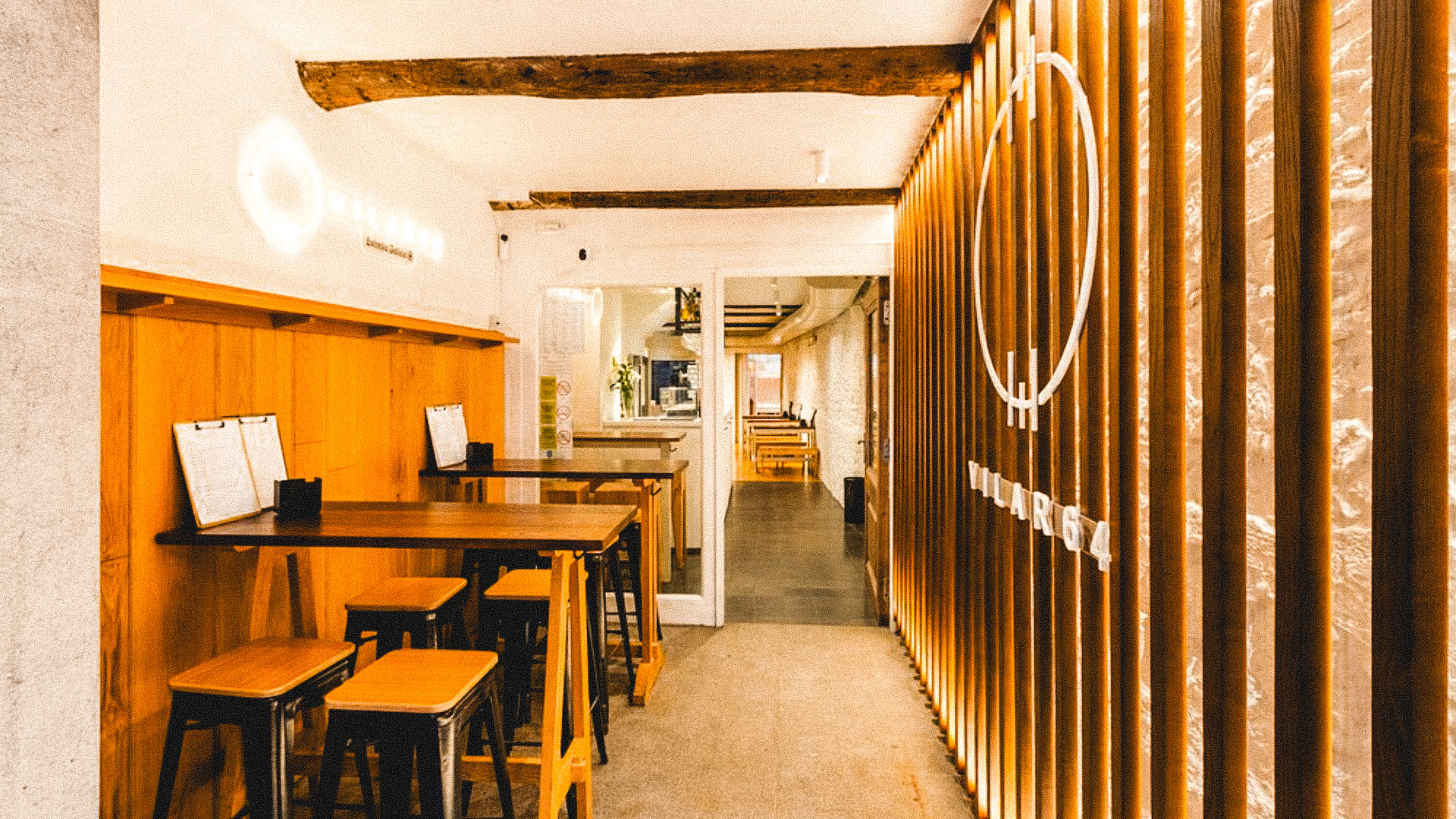
Vilar 64 restaurant

SEE MORE

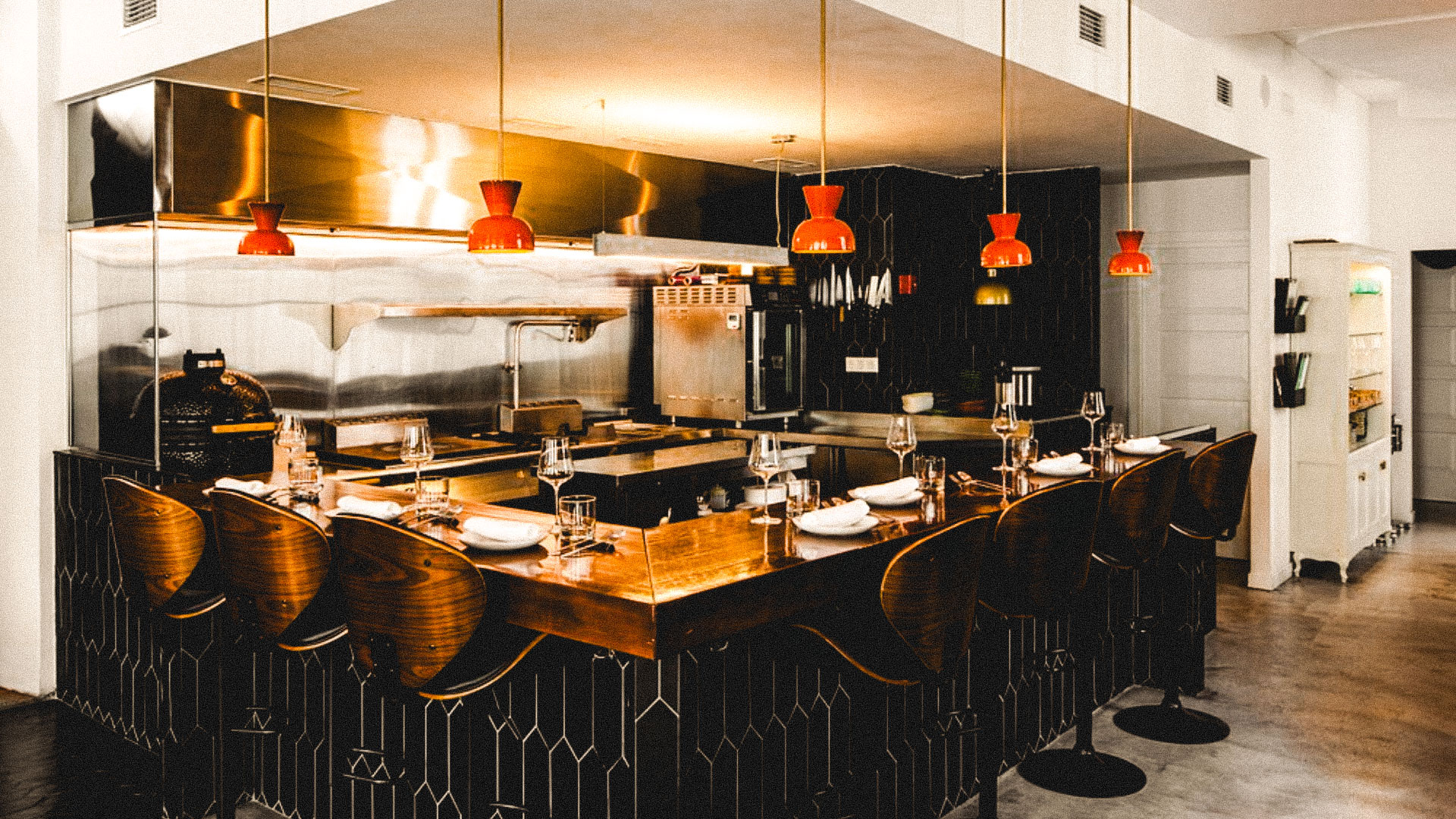
Gaio restaurant

SEE MORE

The Pulpería A Garnacha

SEE MORE

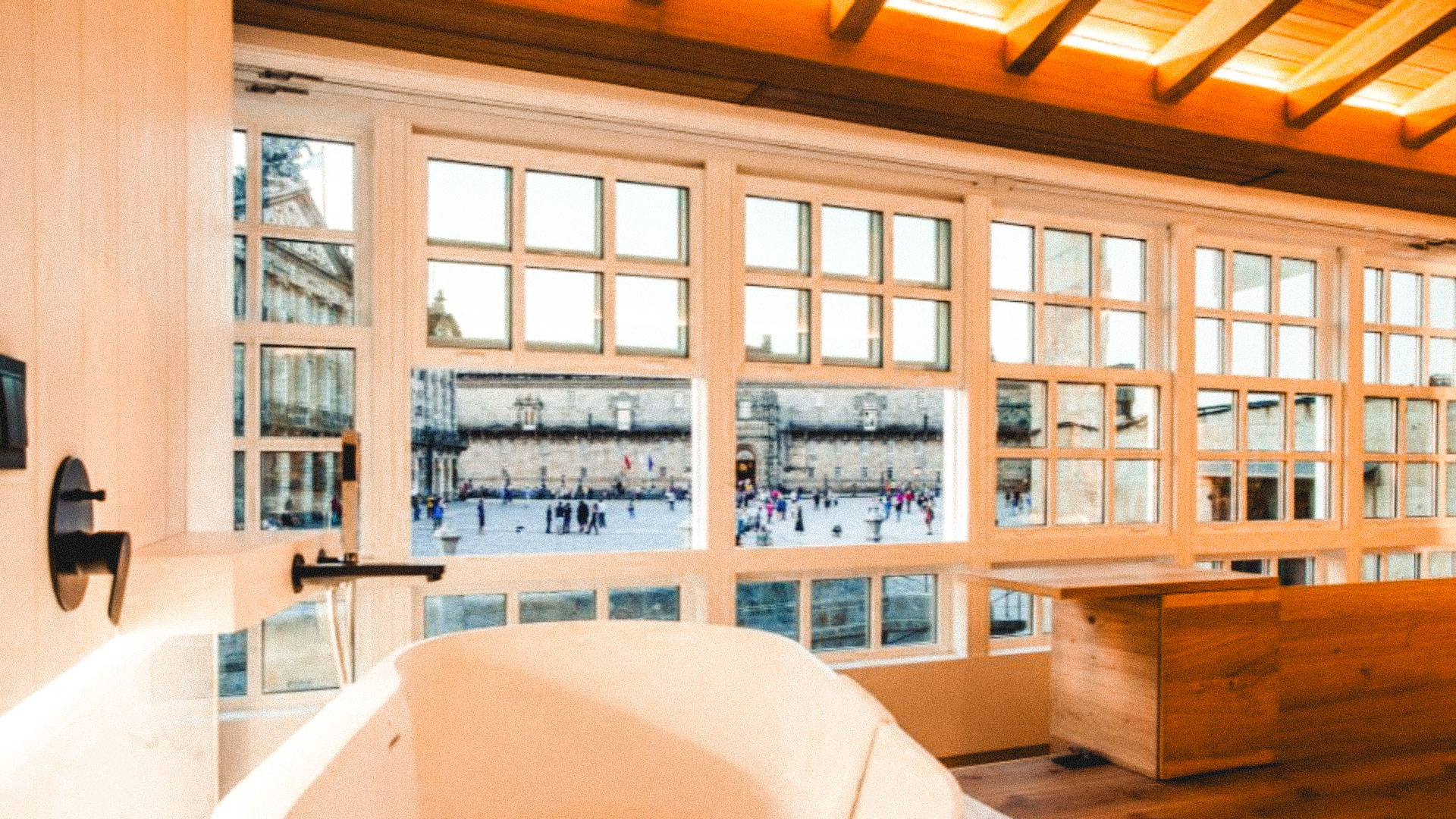
Plaza Obradoiro Hotel

SEE MORE

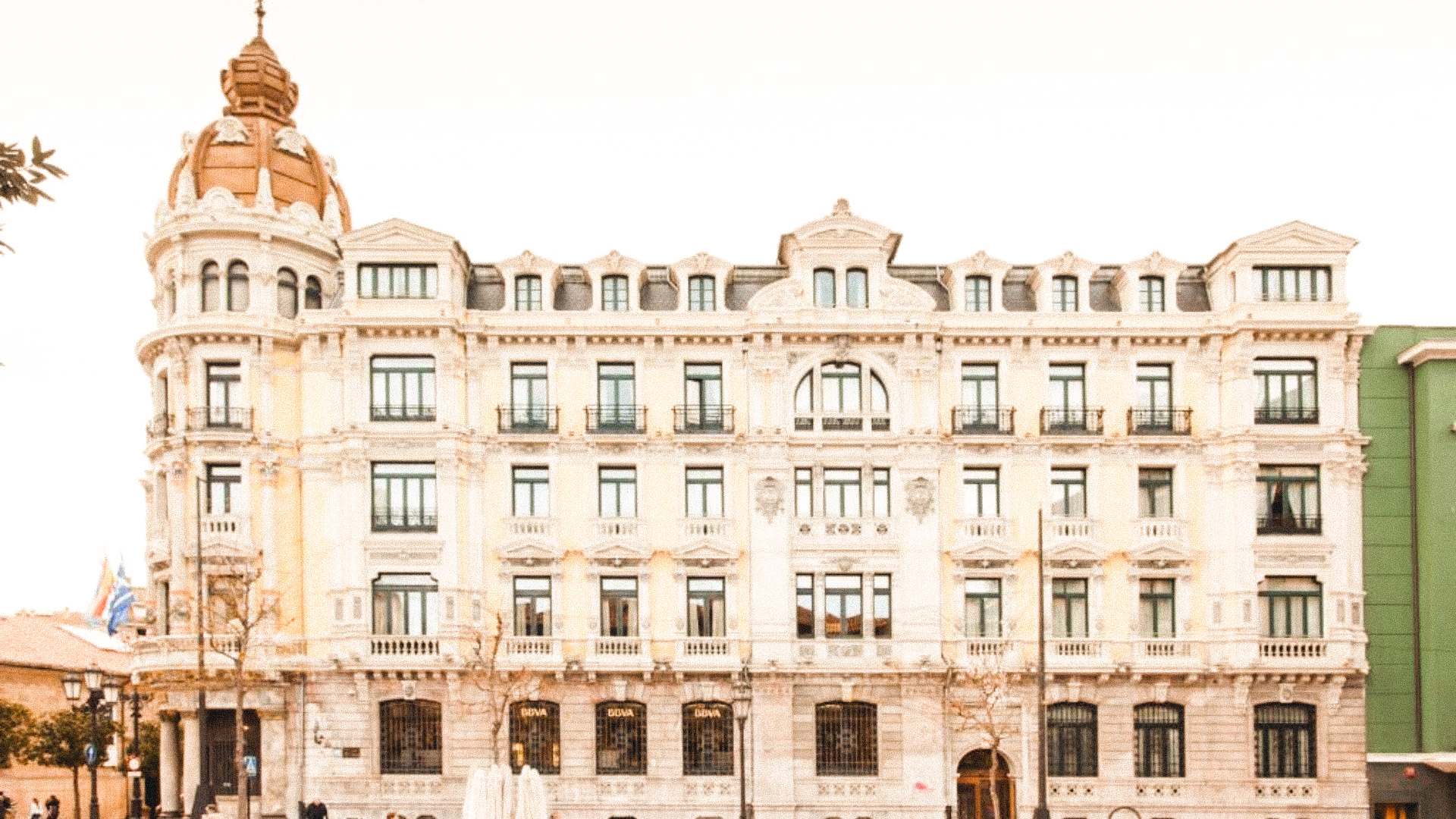
Soho Boutique Oviedo

SEE MORE

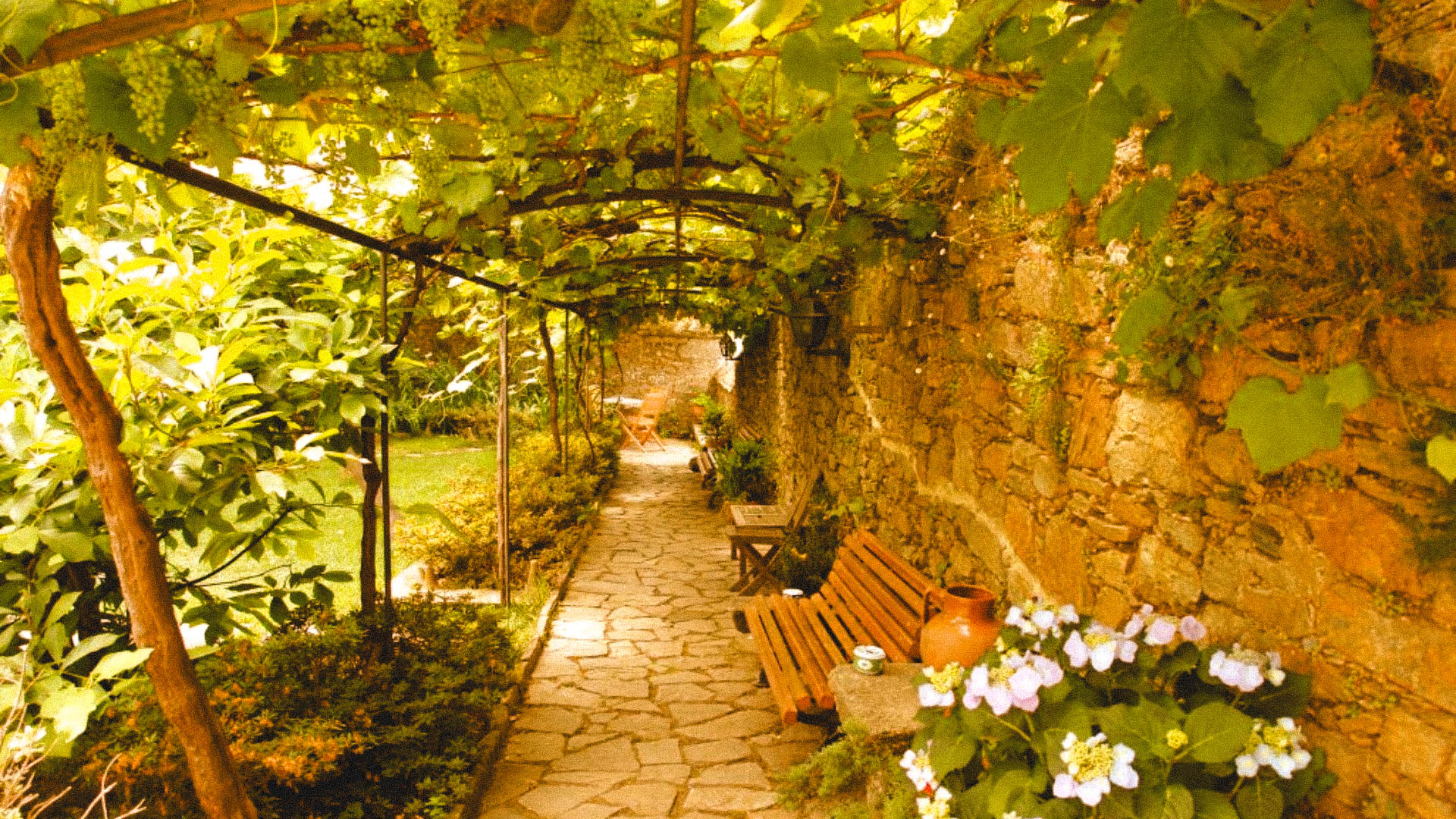
Costa Vella Hotel

SEE MORE

What’s included in your Camino?

Included

  • Private accommodation with en-suite bathroom (depending on chosen category)
  • Daily breakfast
  • Insurance
  • 24/7 emergency phone assistance
  • Detailed Camino guide with stages, maps, and tips
  • Daily WhatsApp check-in and support
  • Camino People welcome pack
  • Personalized recommendations for meals, dinners, and local visits
  • Luggage transfer between stages

Not Included

  • Lunches and dinners not specified in the itinerary
  • Drinks and extra snacks
  • Flights or travel to the starting/ending point (optional transfer available)
  • Personal expenses
  • Cancellation or premium travel insurance (optional)
  • Entrance fees to monuments or museums not included in the itinerary
  • Tips

Extras (Available upon request)

  • Guided Camino (full-time or selected stages)
  • Fully organized trip with exclusive activities
  • Gourmet dinners or unique gastronomic experiences
  • Private cultural visits or entrance tickets with guide
  • Transportation to/from airport or other off-route locations
  • Extra nights before or after the Camino
  • Massage, physiotherapy, or yoga services
  • Cancellation or premium travel insurance

FAQ

Which is the most demanding stage on the Camino Primitivo?

The Ruta de los Hospitales (from Borres to Berducedo) is considered the most challenging stage of the Camino Primitivo. This is a high mountain route featuring long ascents and no services for many kilometers, requiring good physical preparation and sufficient supplies.

Which route to Choose: Hospitales or the Pola de Allande Variant?

It depends on what you’re looking for in your Camino. The Ruta de los Hospitales is the most spectacular and challenging option, crossing high mountain landscapes with breathtaking views, but with no services for many kilometers. It is ideal for those seeking a wilder and more authentic experience.

On the other hand, the Pola de Allande variant is less demanding, with more services and intermediate villages, but it also involves a tough climb to Puerto del Palo. If the weather is bad or you prefer more comfort, this option may be better.

Both routes lead to Berducedo, so the decision will depend on your preparation and preference.

Where can you find the best octopus on the Camino Primitivo?

The best pulpo a feira can be found in Melide, where the Camino Primitivo merges with the French Way. The pulperías in this town, especially the famous Pulpería A Garnacha, are a must-stop for pilgrims.

Related Caminos

Camino Francés from Astorga

13 days - 12 nights

desde

2.700 €
Camino de grava rodeado de bosque con peregrino al fondo y luz filtrándose entre los árboles

Camino Francés from O Cebreiro

9 days - 8 nights

desde

2.500 €

Camino Francés from Sarria (6 stages)

6 days - 5 nights

desde

1.500 €