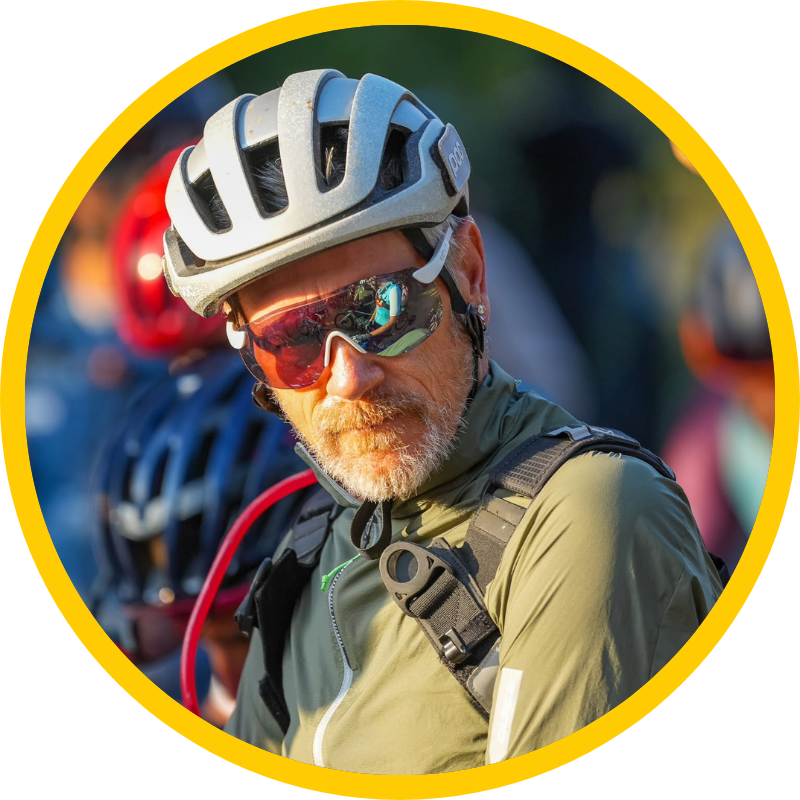
The adventure begins in Pamplona, Spain, and will take you through the entire northern region of the country, leading to Santiago de Compostela, the capital of Galicia.
During these thirteen days of cycling, you’ll discover that the true joy of the journey isn’t just reaching the final destination, but in every pedal stroke along the way.
Experience the Camino de Santiago like never before, savoring the best of the local cuisine, staying in carefully selected accommodations for your comfort, and exploring the landscapes and hidden gems that make this route so famous. Each stage will bring you closer to the true essence of the Camino.
Your own Camino starts here!
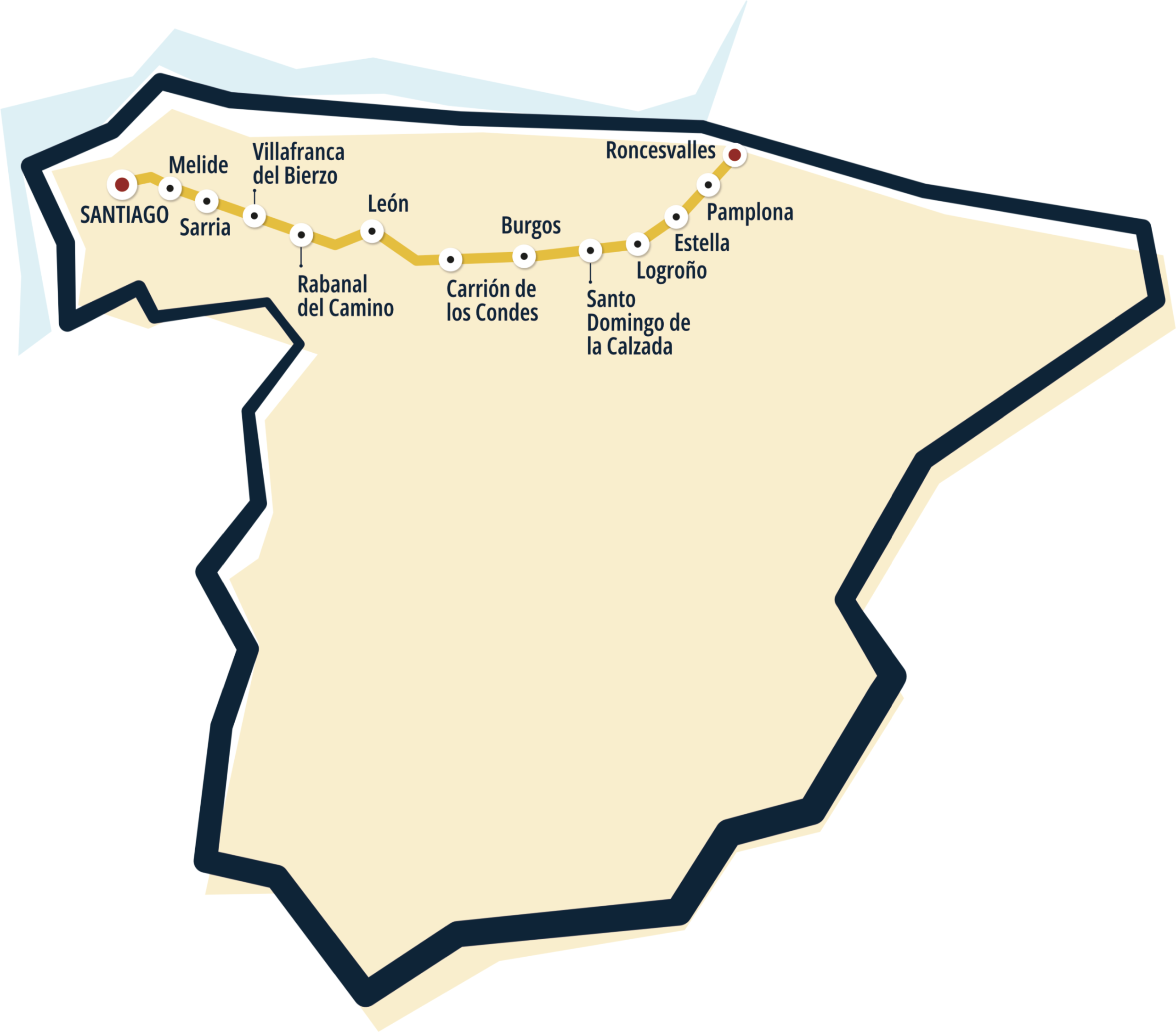
Route
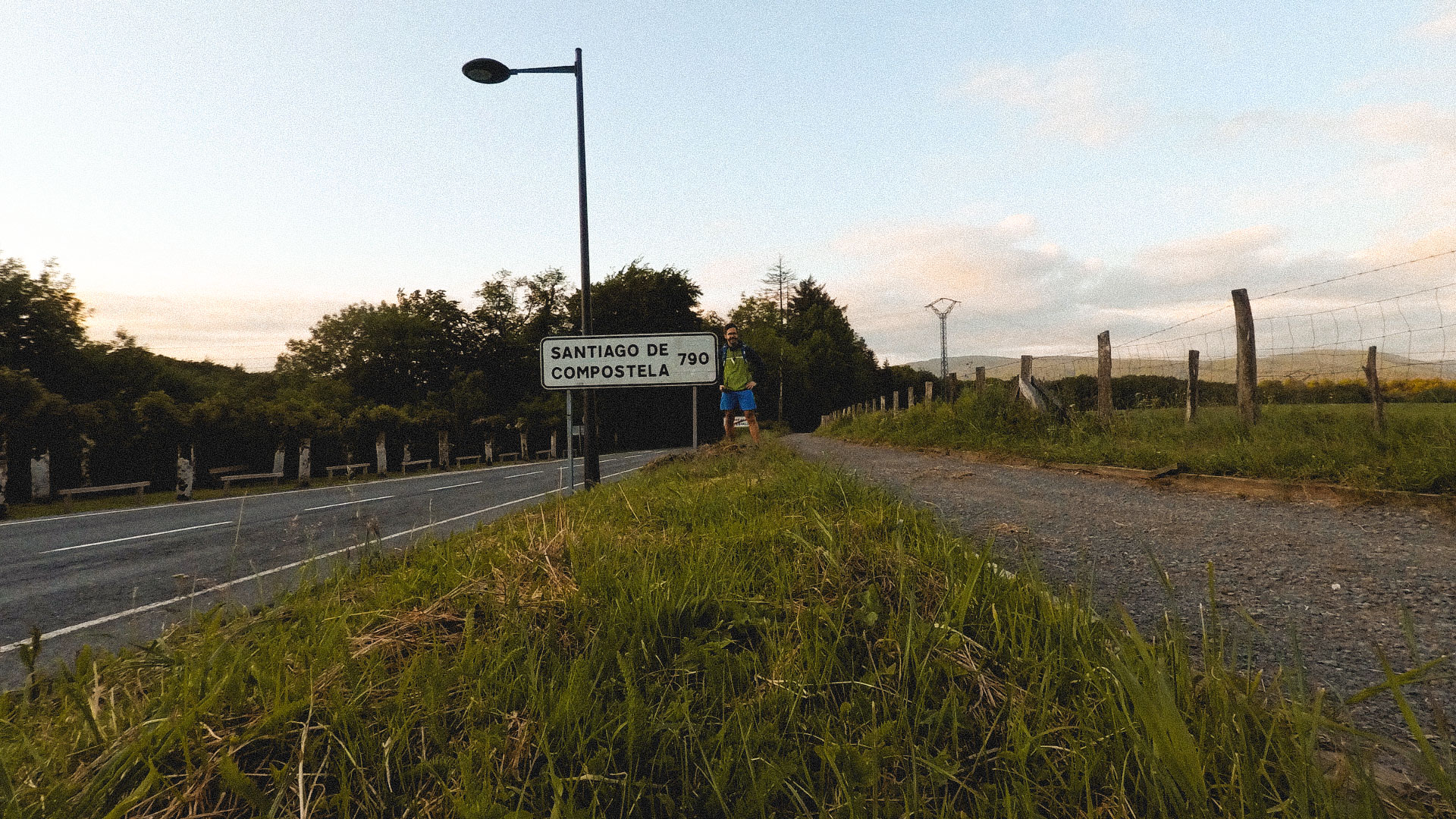 The beginning of your own Camino
Distance: 27.3 miles – 44 km
The route from Roncesvalles to Pamplona by bike is an incredible experience, blending mountain landscapes, picturesque villages, and well-maintained roads.
Starting from historic Roncesvalles, the path winds through charming rural towns like Burguete and Espinal, before descending into Zubiri, where you’ll enjoy breathtaking views of the Arga River. With gentle climbs and thrilling descents, this route strikes the perfect balance between challenge and enjoyment.
As you approach Pamplona, the lush green valleys give way to the majestic city walls and the vibrant atmosphere of the city, offering a unique mix of nature and culture.
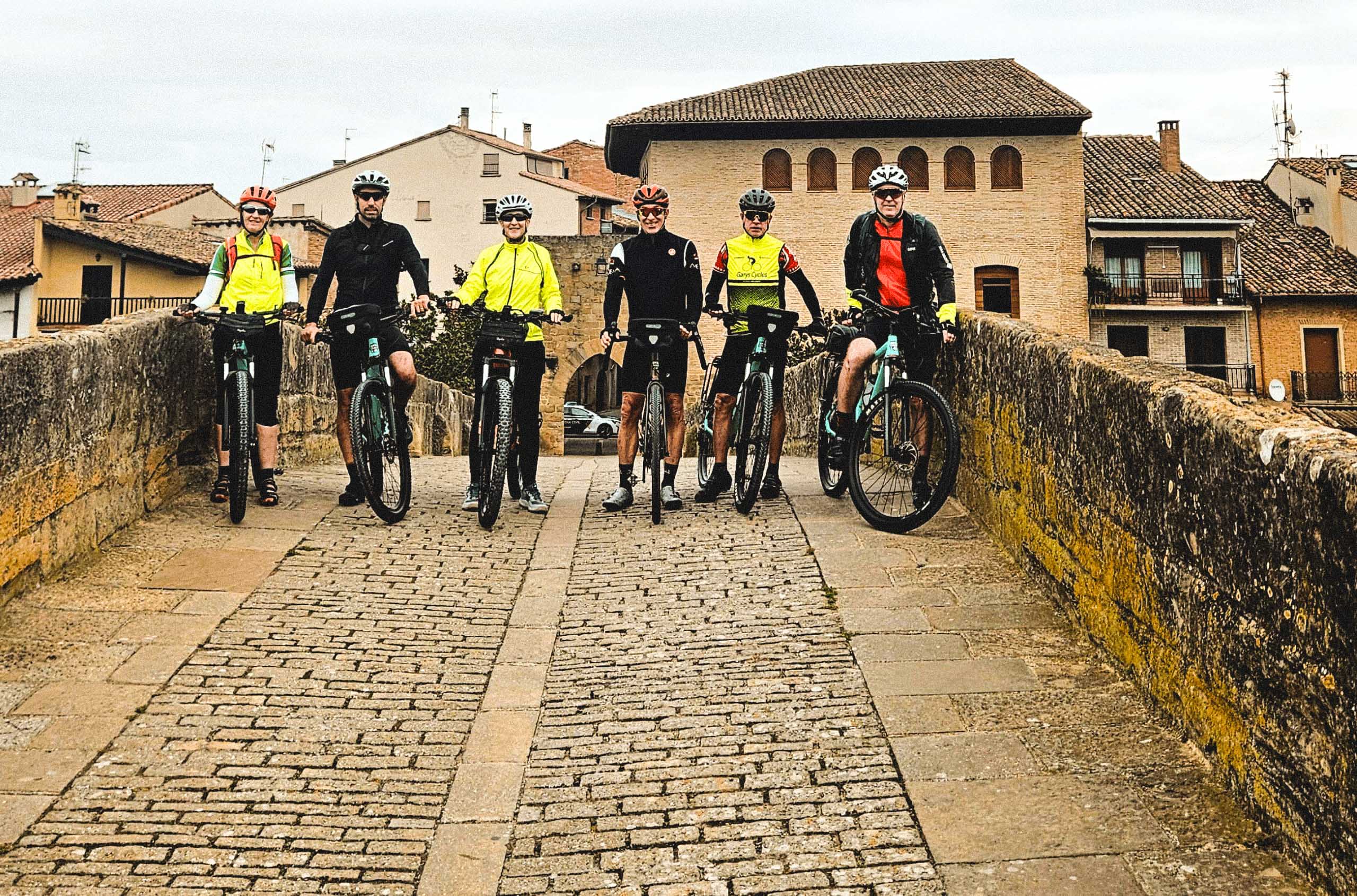
Hop on your bike – your Camino begins!
Distance: 28 miles – 45 km
The Pamplona-Estella stage is a journey full of history and beauty, with the Alto del Perdón as its highlight. From Pamplona, passing through Cizur Menor and Zariquiegui, the steep climb to the Alto del Perdón begins, rewarding you with panoramic views and its iconic monument at the summit. The descent, while exhilarating, requires caution.
Along the way, you’ll ride through historic towns like Puente la Reina, famous for its 11th-century medieval bridge, and Cirauqui, home to a Roman road, a lasting relic of the ancient Camino.
The stage ends in Estella, a town renowned for its gastronomy and its historic role in welcoming pilgrims. Here, you can enjoy a well-deserved rest in its charming park.
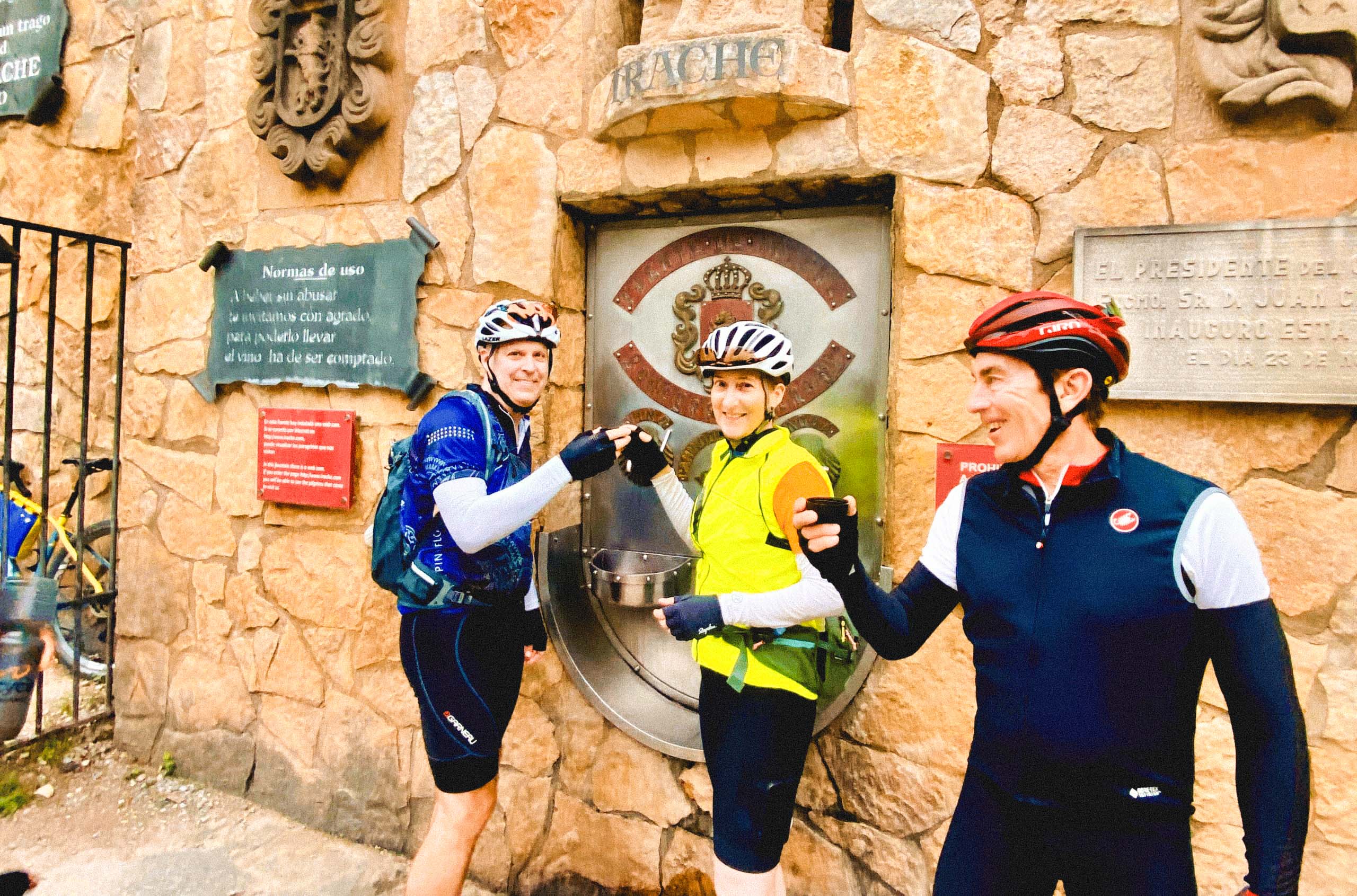
A relaxed stage: views, history and a toast at the wine fountain
Distance: 30.4 miles – 49km
Are you ready for a stage that combines stunning landscapes, rich history, and a touch of fine wine?
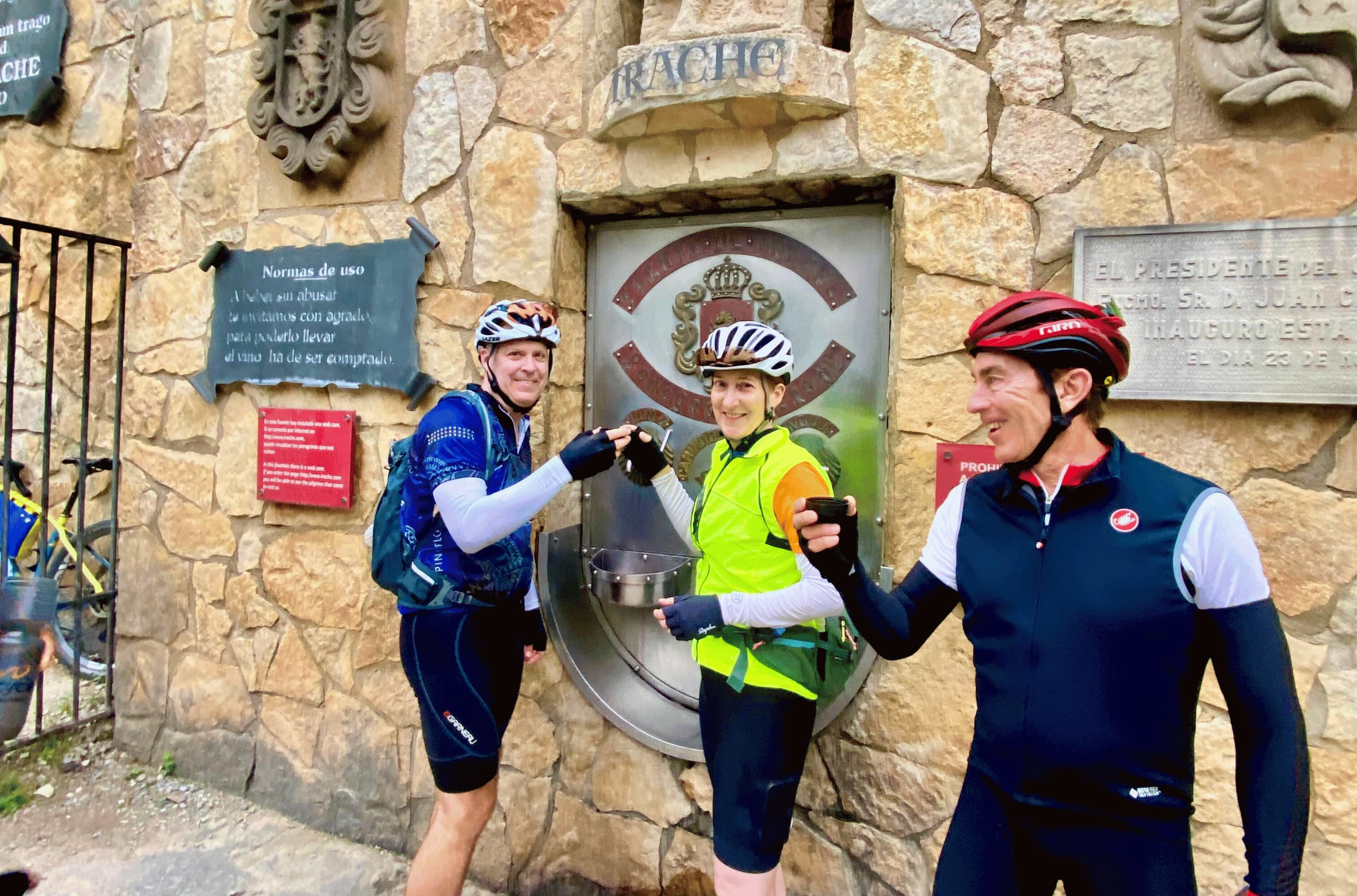
The Estella-Logroño route promises a relaxed and charming ride. After leaving Estella, the adventure begins with a short climb leading to the iconic Wine Fountain in Ayegui, the perfect place to toast to the journey. While there are a few hills and descents, most of the route is pure cycling bliss, featuring smooth trails and breathtaking views.
Between Torres del Río and Viana, cyclists will enjoy a fully rideable section, easing the way towards Logroño. Upon arriving in this lively city, famous for its tapas streets like Calle Laurel, you can end the day soaking up the vibrant atmosphere before resting and preparing for the next stage.
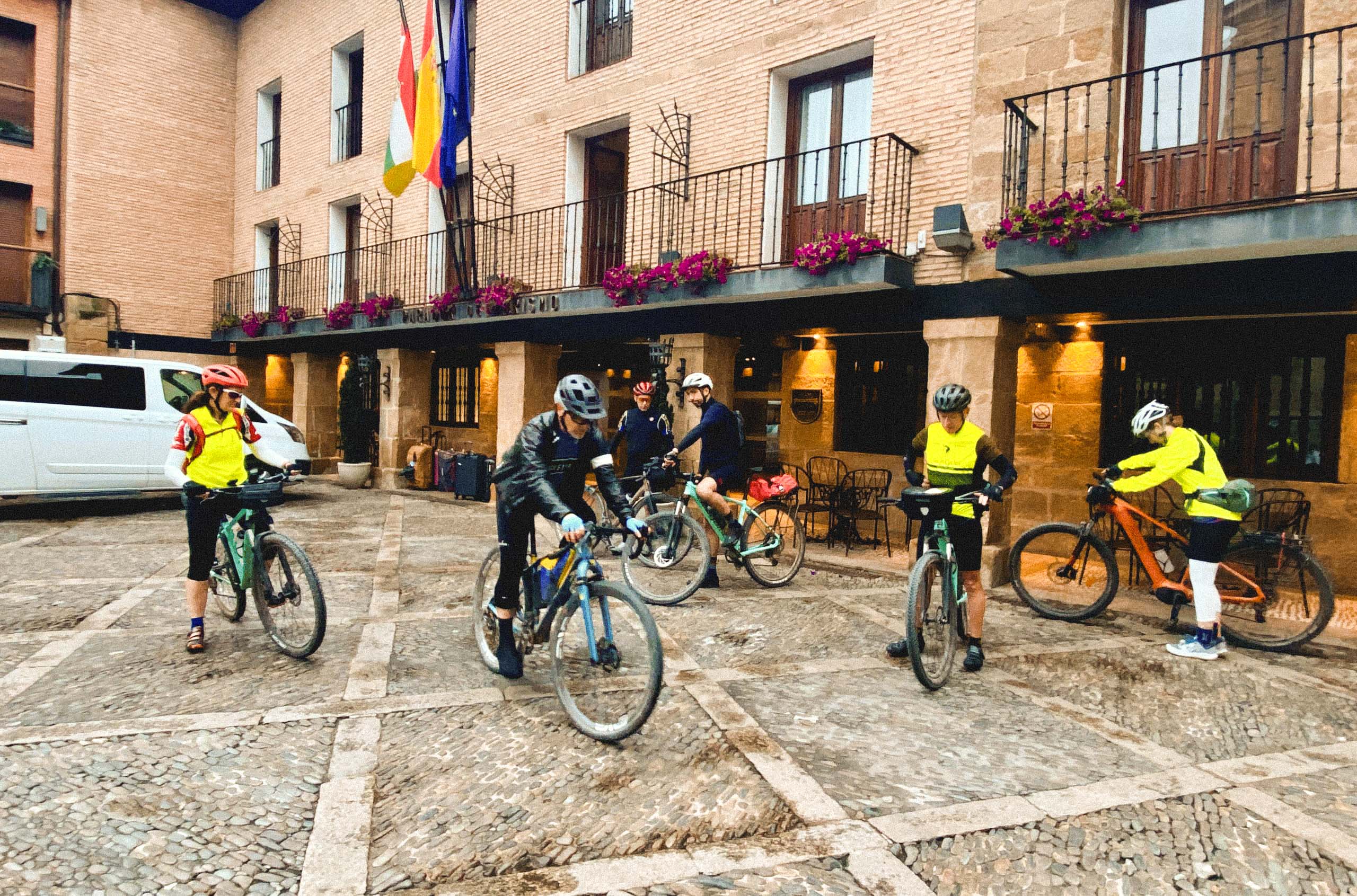
Vineyards, history and legends of the Camino
Distance: 35.4 miles – 57 km
The day begins in Logroño, the capital of La Rioja, on an unforgettable journey through the heart of the region, known for its vineyards and golden fields.
Leaving Logroño, the route starts at La Grajera Park, where you’ll pass by the statue of Marcelino, the wandering pilgrim. Along the way, you’ll ride through charming villages like Navarrete, with its historic streets, and Nájera, the former capital of the Kingdom of Navarre, home to the Church of Santa María la Real.
The stage culminates with a climb to Alto de San Antón, followed by a descent into Santo Domingo de la Calzada, a town famous for the legend of the rooster and the hen, which adds a touch of magic to the journey. The Cathedral of Santo Domingo is another significant landmark, renowned for the miraculous resurrection of a young pilgrim.
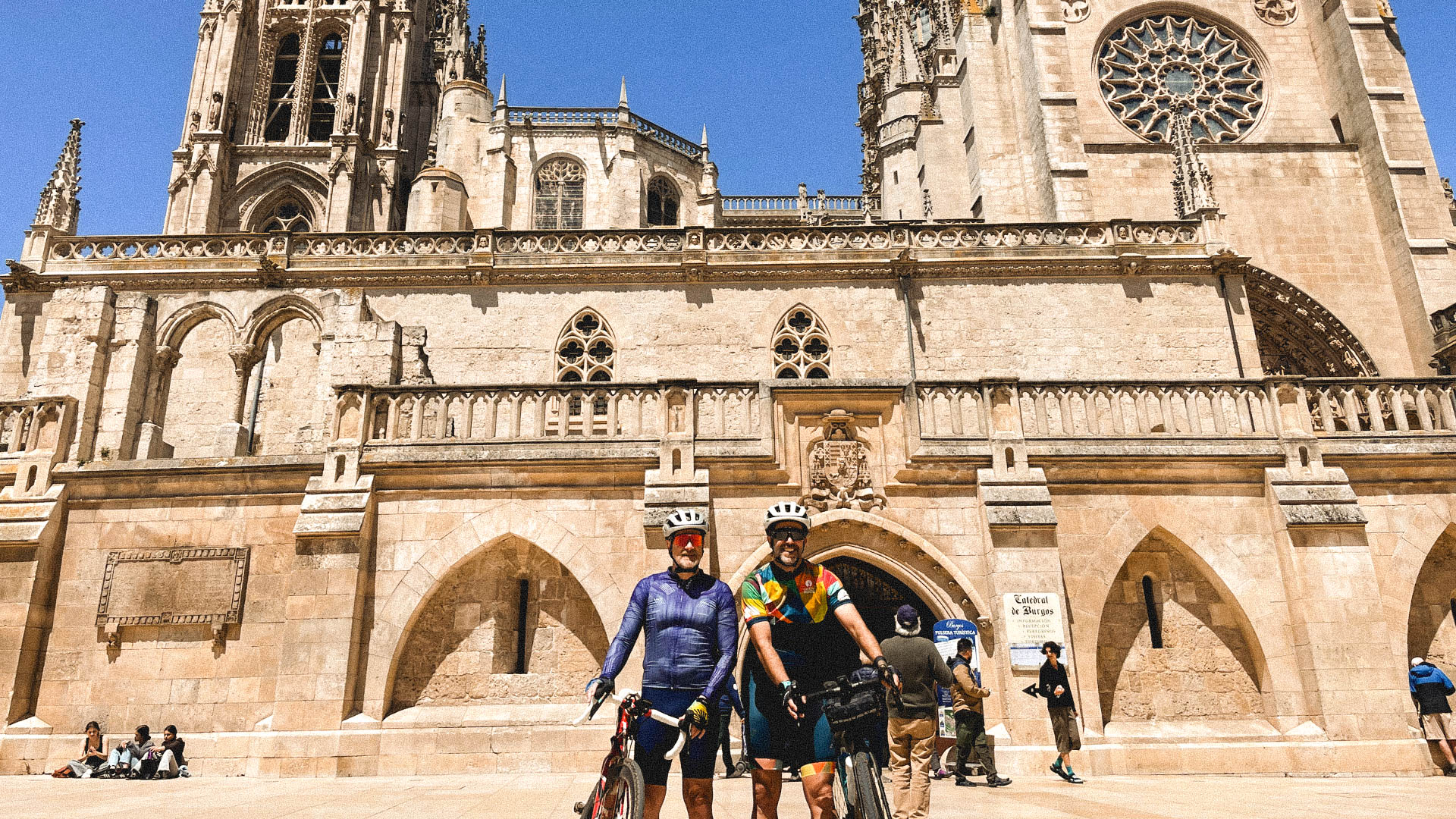
An epic challenge through mountains and the grand Cathedral of Burgos
Distance: 45.3 miles – 72,9 km
The Santo Domingo de la Calzada to Burgos stage is a long yet diverse journey, taking pilgrims from the vineyards of La Rioja to the heart of Castile.
Leaving behind the historic town of Santo Domingo de la Calzada, the route passes through vast fields and charming villages like Belorado and Villafranca Montes de Oca. The trail features rolling hills, and upon reaching Villafranca Montes de Oca, the climb continues to the Atapuerca Mountains, where breathtaking views await before the descent into Burgos.
The stage culminates with the arrival in Burgos, where the magnificent Gothic cathedral and the lively city atmosphere provide a well-deserved reward after an intense yet unforgettable day on the Camino.
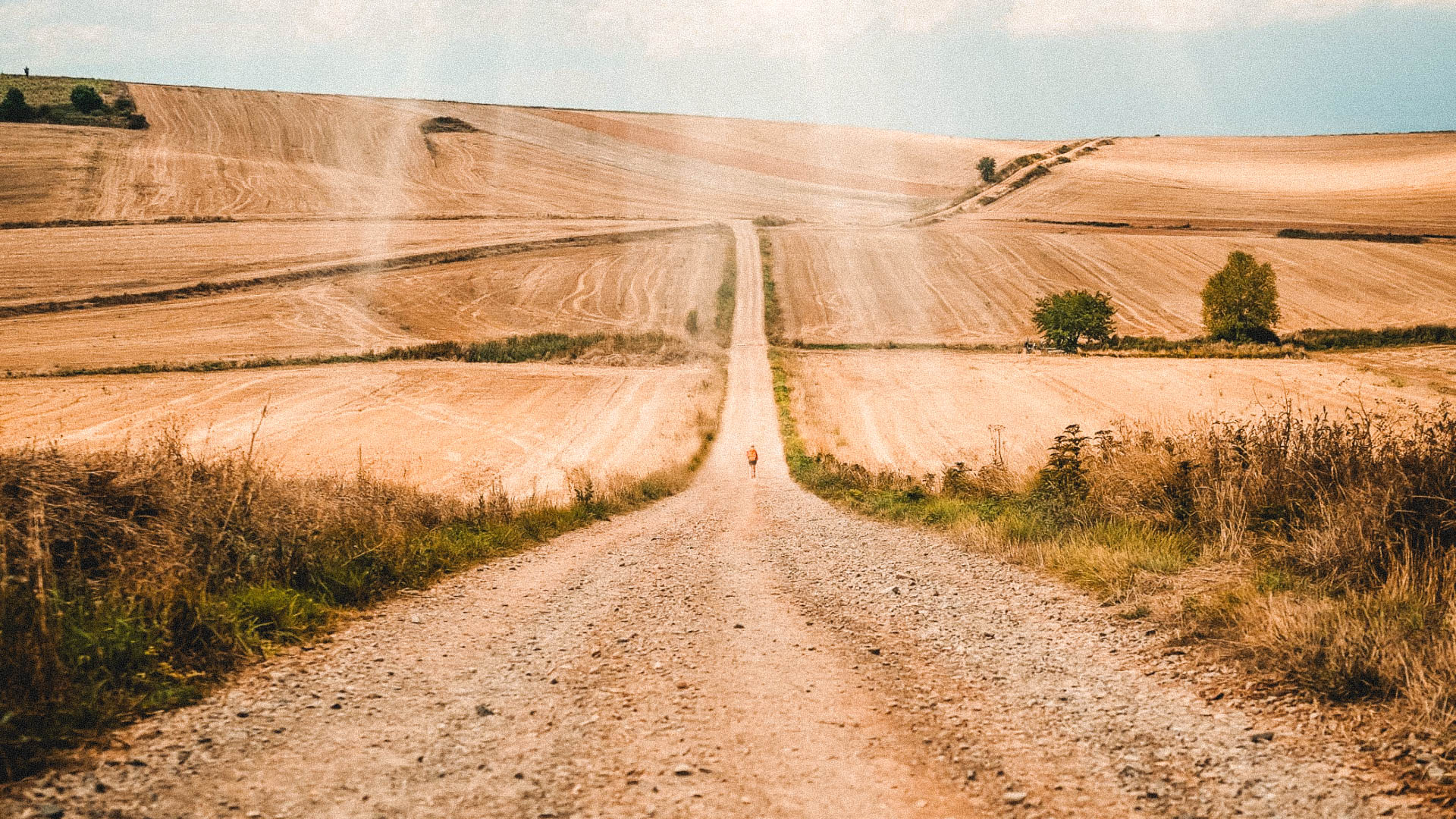
History, golden fields and endless landscapes
Distance: 54 miles – 87 km
The cycling stage from Burgos to Carrión de los Condes takes riders through the serene Castilian plateau, with vast open landscapes and endless skies.
Starting from the majestic Burgos Cathedral, the route winds through golden fields, passing through historic towns like Castrojeriz and Frómista, home to its iconic Romanesque church.
This journey blends the tranquility of nature with the cultural richness of small villages, culminating in the welcoming charm of Carrión de los Condes.
Contrast: from silence to a vibrant atmosphere
Distance: 59 miles – 95 km
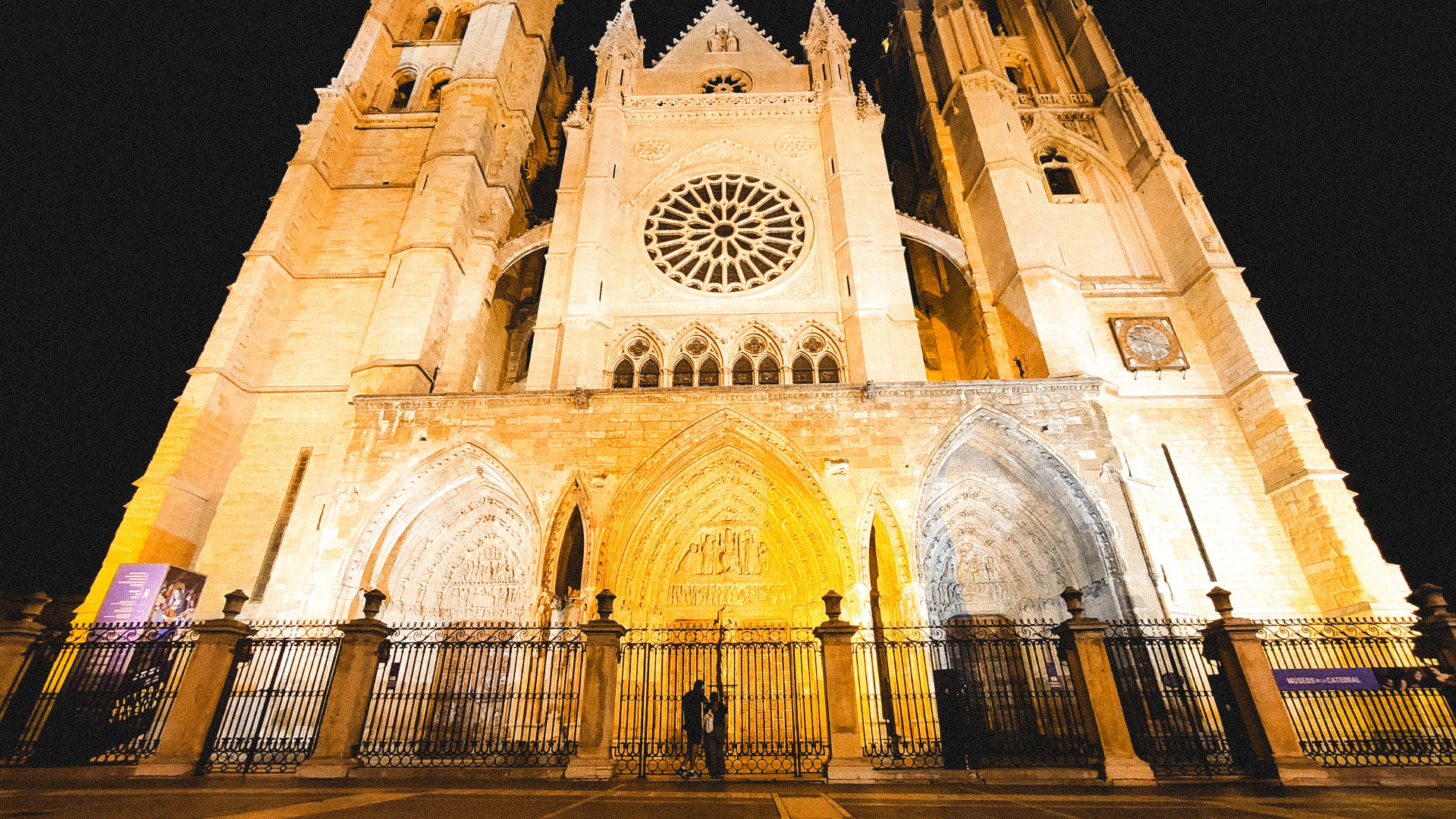
The Carrión de los Condes to León stage is one of the longest on the Camino, but also one of the most rewarding.
From Carrión, the route crosses the vast Castilian plains and endless wheat fields, with few villages along the way, creating a sense of peace and reflection. As cyclists approach León, the city’s grandeur slowly unfolds.
The final stretch offers panoramic views, and arriving in León is a striking contrast, its imposing gothic cathedral and lively historic center provide the perfect setting to rest, eat and recharge after a demanding yet fulfilling journey.
A pause on your Camino
Distance: 0 miles
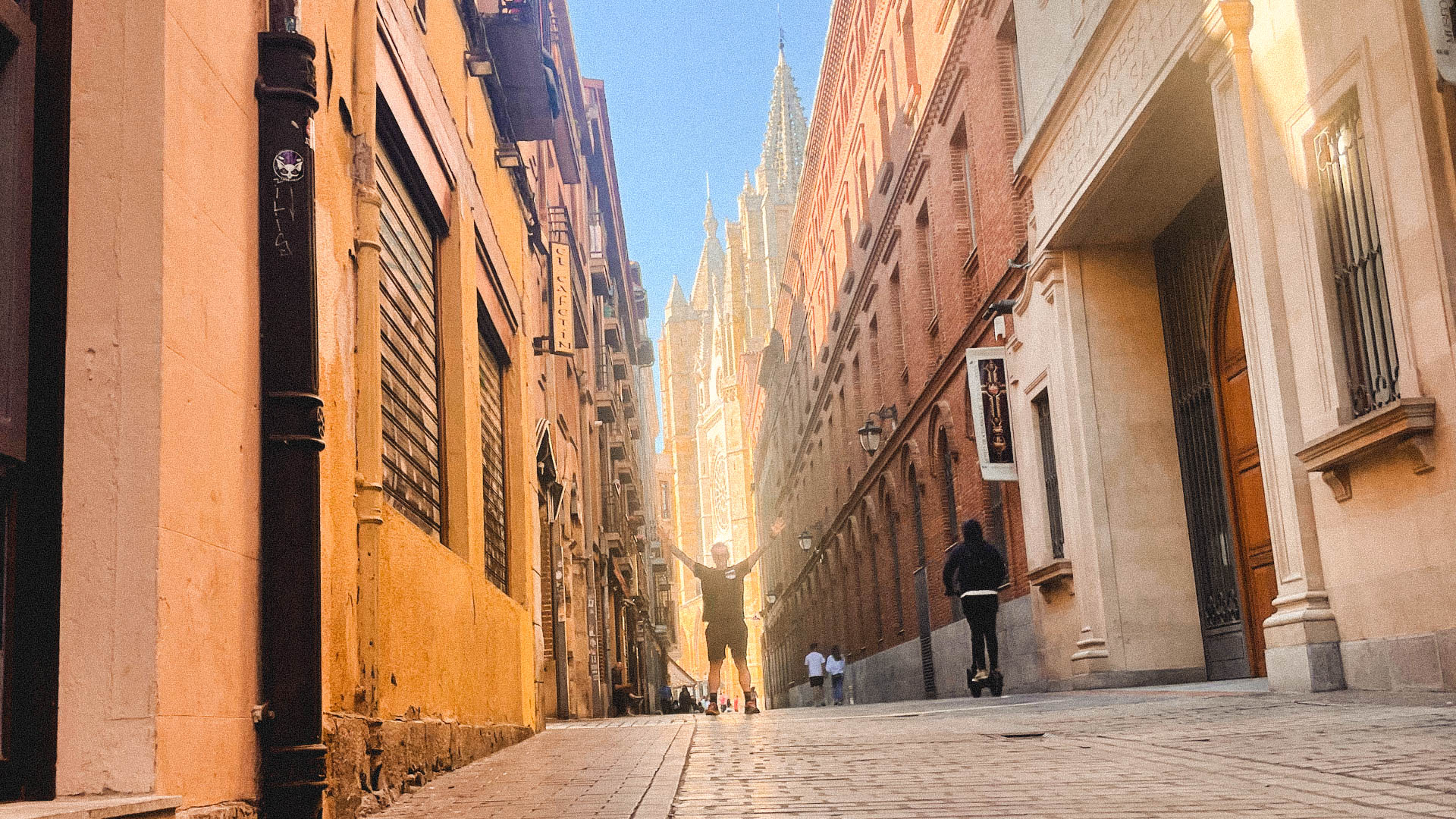
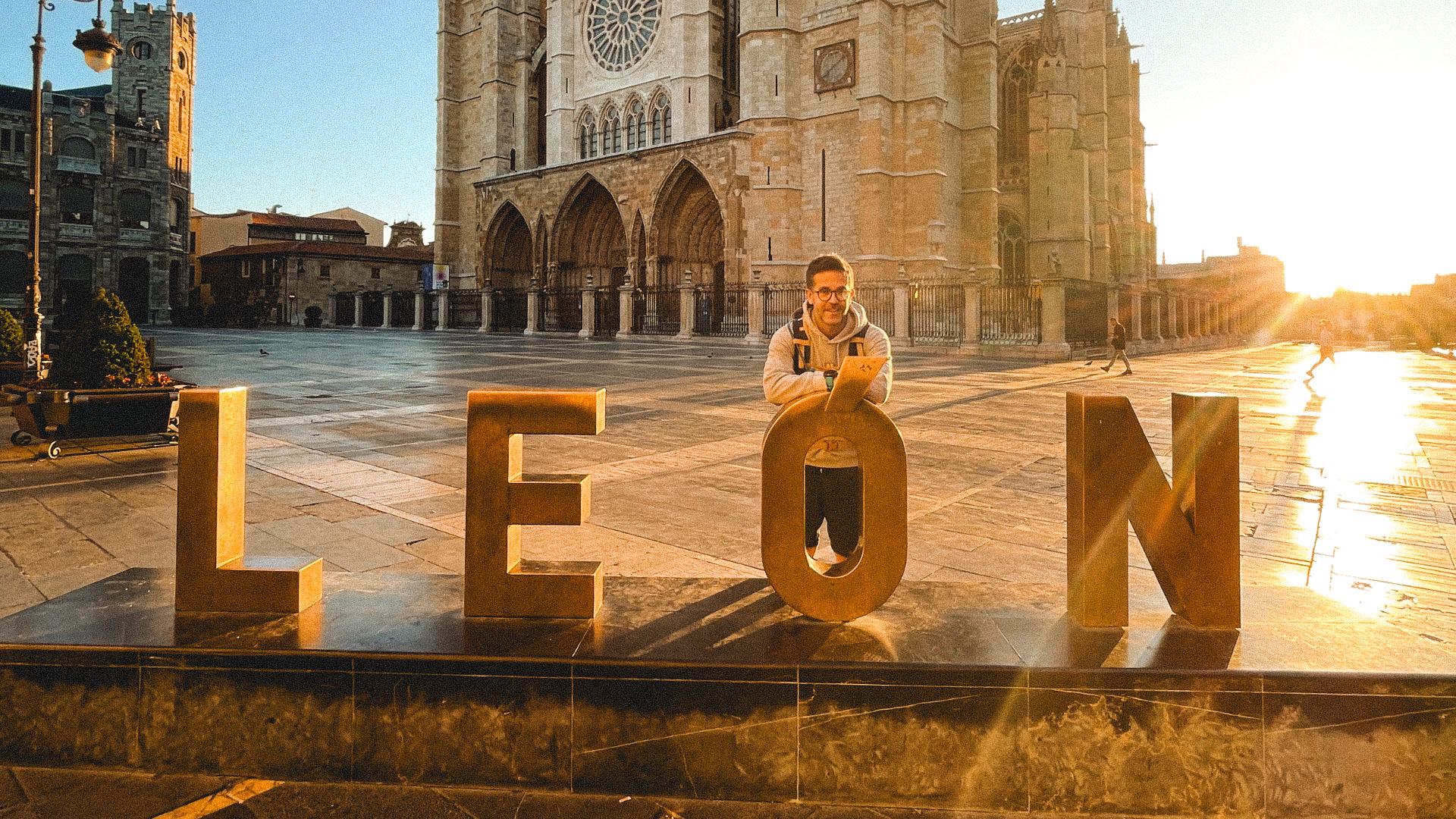
A rest day in León is the perfect opportunity to immerse yourself in the city’s rich history and vibrant culture.
Start by exploring the impressive León Cathedral, a gothic masterpiece renowned for its breathtaking stained-glass windows. Then, wander through the Barrio Húmedo, famous for its lively tapas bars and charming cobbled streets, where you can savor the best of local cuisine.
To end the day, take a relaxing stroll through La Candamia Park or along the Bernesga River, providing a moment of tranquility before returning to the city’s vibrant atmosphere.
 From the city to the mountain landscapes of Maragatería
Distance: 43.5 miles – 70 km
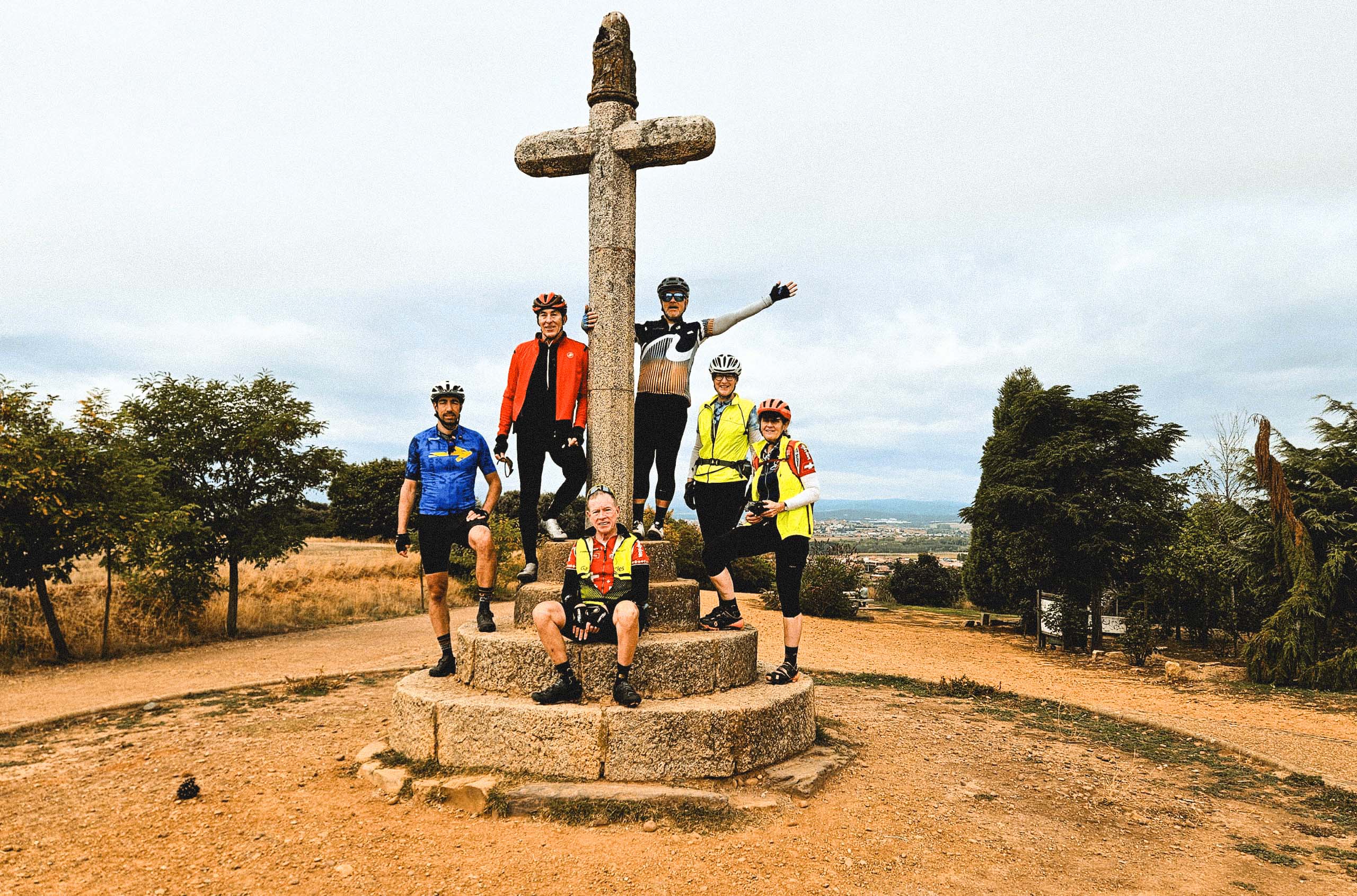
Back on the bike! This stage from León to Rabanal del Camino marks the transition from the city to the serenity of the rural landscape.
Leaving León, the route winds through fields and small villages, passing through San Martín del Camino and Villadangos del Páramo, before reaching the charming village of Rabanal del Camino. Along the way, cyclists enjoy a gradually changing landscape, where rolling hills begin to hint at the breathtaking beauty of the Maragatería region, known for its green meadows and rugged mountains.
In Rabanal del Camino, the peaceful atmosphere and rich traditions of the Maragatos provide the perfect place to rest before tackling the next stage of the journey.
 The emotion of the Cruz de Ferro and the serenity of the landscape
Distance: 36.7 miles – 59 km
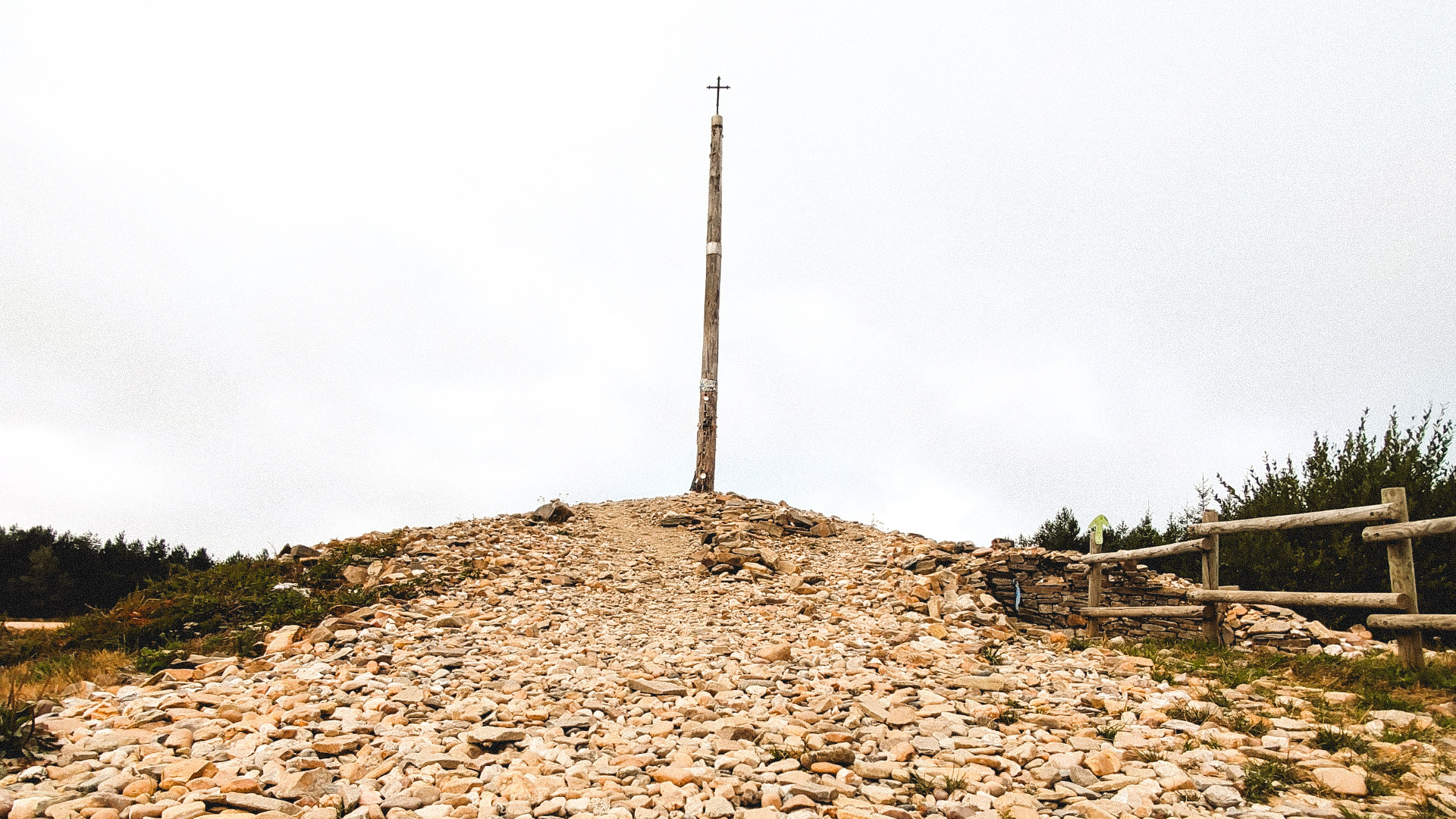
The Rabanal del Camino to Villafranca del Bierzo stage is an unforgettable journey, highlighted by the majestic Cruz de Ferro, one of the most symbolic points on the Camino de Santiago.
The day begins with a challenging ascent to the Cruz de Ferro, where pilgrims, filled with emotion, leave a stone as an offering, a gesture of personal and spiritual significance. From this iconic spot, the path gently descends, winding through lush, mountainous landscapes until reaching Villafranca del Bierzo.
This picturesque town, with its medieval streets and the Monastery of San Francisco, provides a well-deserved rest and an opportunity to reflect on the deeper meaning of the Camino.
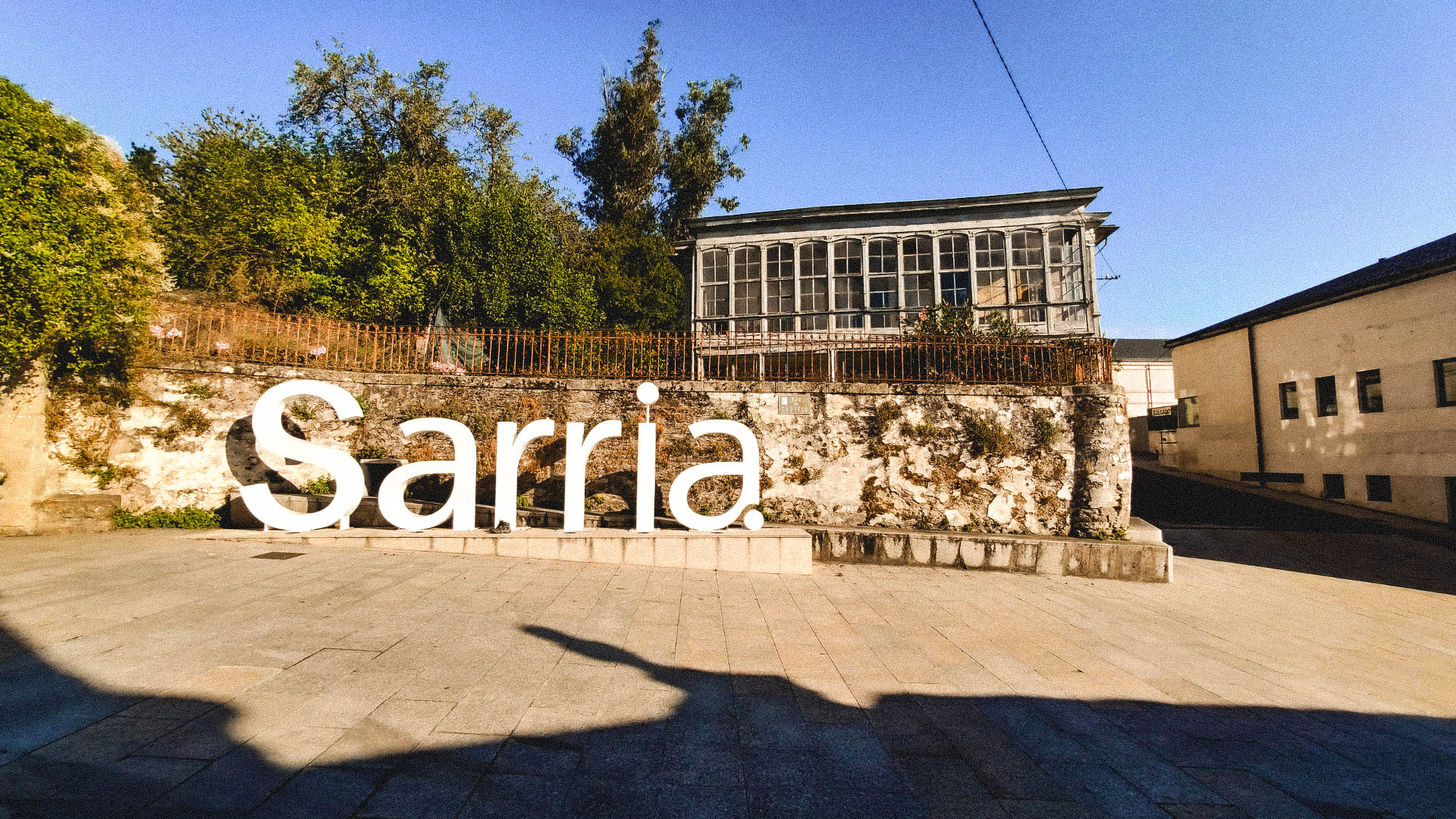 The challenge of O Cebreiro and the entry into Galicia
Distance: 442.9 miles – 69 km
The Villafranca del Bierzo to Sarria stage is one of the most iconic on the Camino de Santiago, particularly due to the climb to O Cebreiro, a demanding ascent that rewards cyclists with breathtaking views.
Reaching O Cebreiro, pilgrims are welcomed by the traditional pallozas, ancient stone houses with thatched roofs, and the feeling of crossing into Galicia, where the landscape shifts to lush green mountains and valleys.
From O Cebreiro, the route descends gently towards Sarria, passing through charming Galician villages with traditional architecture. Arriving in Sarria marks the beginning of a new phase of the Camino, where the Galician atmosphere becomes more distinct and the final stretch to Santiago feels closer than ever.
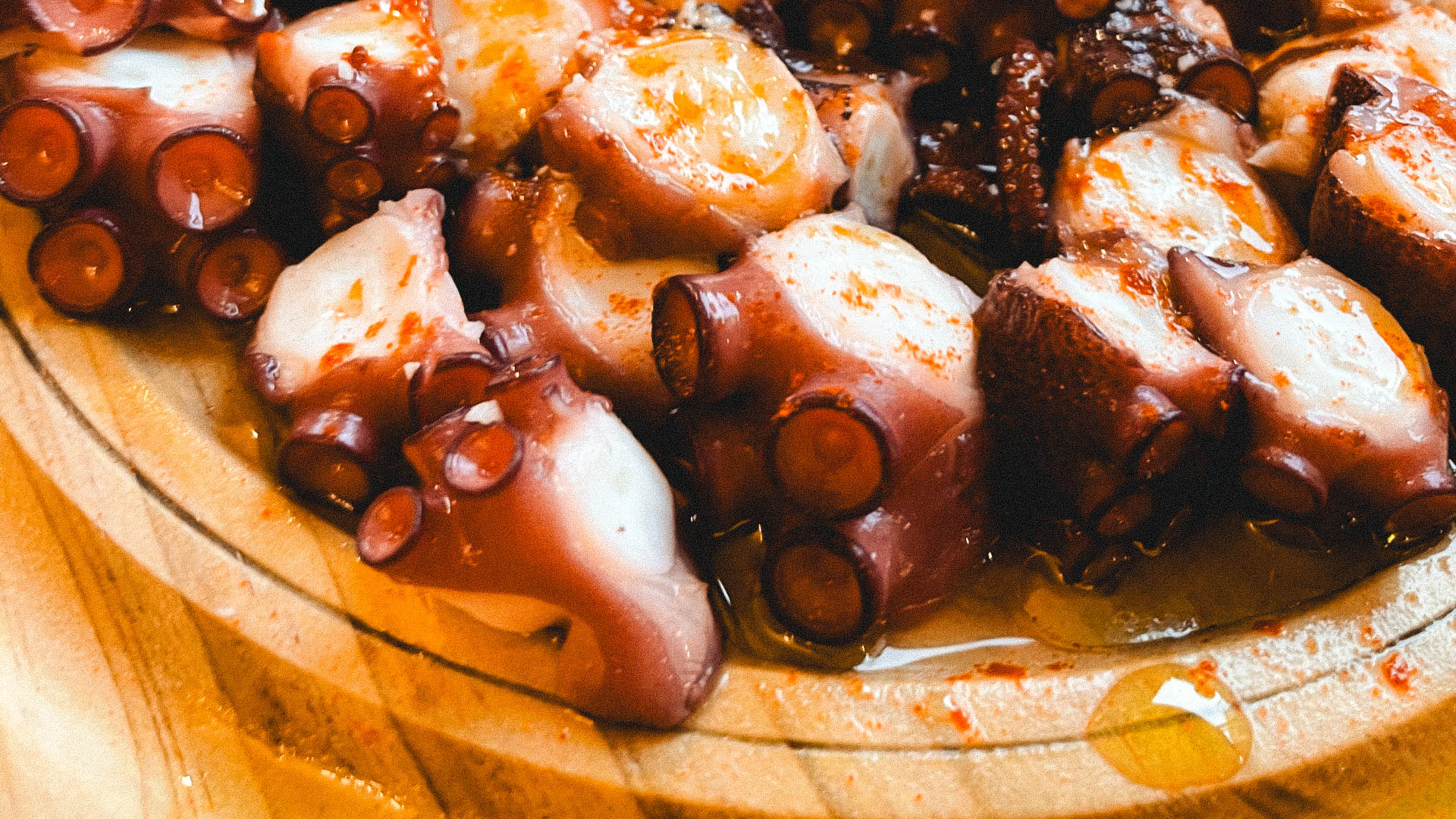 The beauty of nature and the famous pulperías of Melide will amaze you
Distance: 39.1 miles – 63 km
The Camino de Santiago stage from Sarria to Melide is a journey filled with natural beauty, featuring lush forests, charming villages, and medieval bridges that make every kilometer a delight.
Upon reaching Melide, one thing takes center stage: pulpo a la gallega. This town is renowned for its delicious octopus dish, best enjoyed in its traditional pulperías, such as Ezequiel or A Garnacha, where it is perfectly cooked and served with fresh Galician bread and a glass of wine or beer.
An essential stop to recharge, indulge in local flavors, and savor one of Galicia’s most iconic dishes.
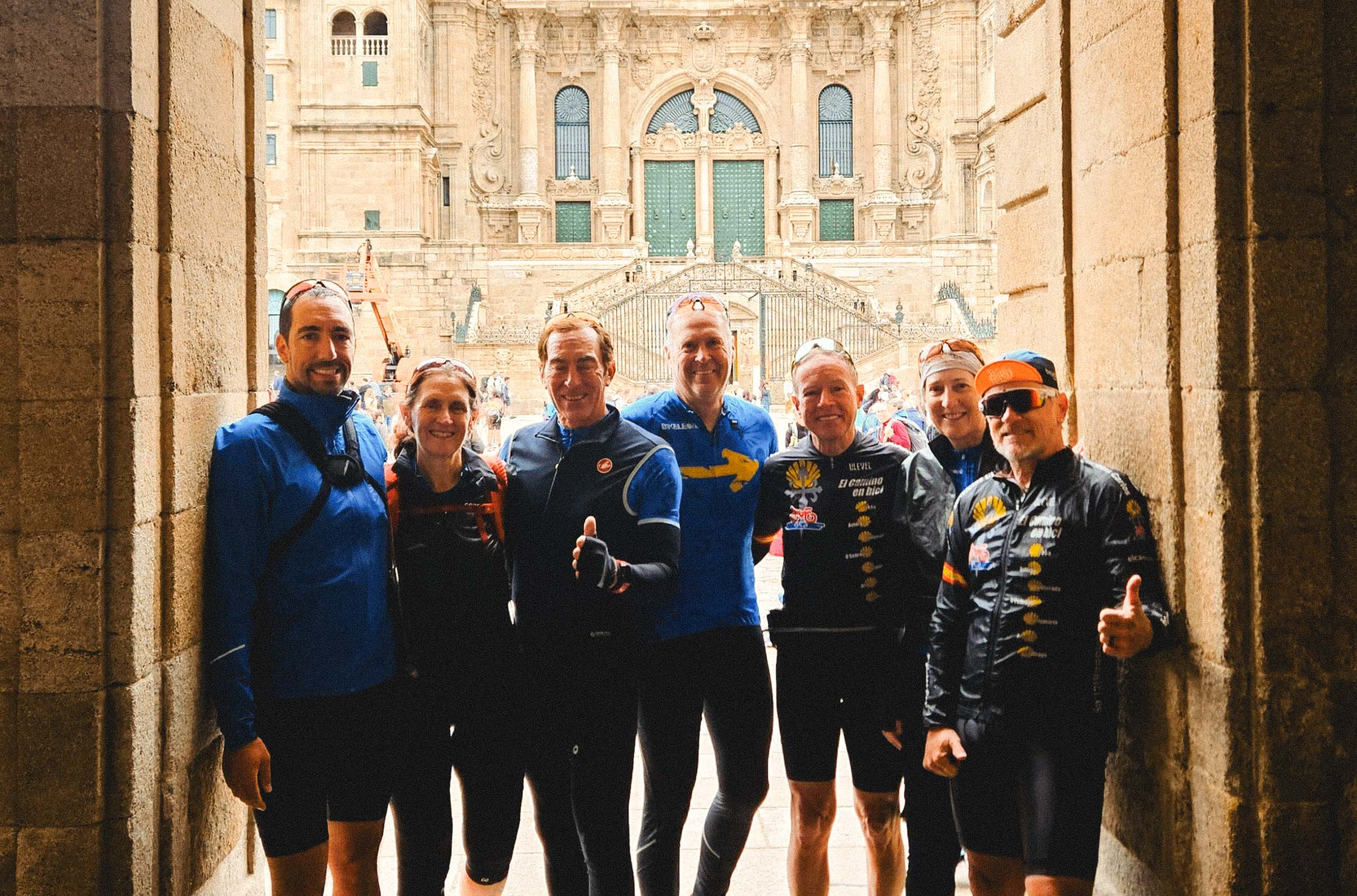
The final stretch to the Apostle
Distance: 34.2 miles – 55 km
The Melide to Santiago de Compostela stage is a journey filled with emotion and natural beauty, marked by the anticipation of reaching the end of the Camino.
From Melide, the route winds through dense forests, passing through villages like Raído, Parabispo, and Boente, with continuous gentle ascents and descents. The realization that the journey is nearing its end begins in Arzúa, as the path continues through eucalyptus groves and quaint hamlets like Pregontoño and Salceda, drawing ever closer to Santiago.
Upon reaching Monte do Gozo, the towers of Santiago’s cathedral come into view, and from there, the final descent leads into the city’s historic center. The Camino culminates in the magnificent Plaza del Obradoiro, in front of the majestic cathedral, where pilgrims stamp their final credential and receive the Compostela. After a well-deserved rest, it’s time to experience the cathedral rituals, including embracing the Apostle and attending the Pilgrim’s Mass, marking the end of a truly unique and spiritual experience.
Route
The beginning of your own Camino
Distance: 27.3 miles – 44 km
The route from Roncesvalles to Pamplona by bike is an incredible experience, blending mountain landscapes, picturesque villages, and well-maintained roads.
Starting from historic Roncesvalles, the path winds through charming rural towns like Burguete and Espinal, before descending into Zubiri, where you’ll enjoy breathtaking views of the Arga River. With gentle climbs and thrilling descents, this route strikes the perfect balance between challenge and enjoyment.
As you approach Pamplona, the lush green valleys give way to the majestic city walls and the vibrant atmosphere of the city, offering a unique mix of nature and culture.
Hop on your bike – your Camino begins!
Distance: 28 miles – 45 km
The Pamplona-Estella stage is a journey full of history and beauty, with the Alto del Perdón as its highlight. From Pamplona, passing through Cizur Menor and Zariquiegui, the steep climb to the Alto del Perdón begins, rewarding you with panoramic views and its iconic monument at the summit. The descent, while exhilarating, requires caution.
Along the way, you’ll ride through historic towns like Puente la Reina, famous for its 11th-century medieval bridge, and Cirauqui, home to a Roman road, a lasting relic of the ancient Camino.
The stage ends in Estella, a town renowned for its gastronomy and its historic role in welcoming pilgrims. Here, you can enjoy a well-deserved rest in its charming park.
A relaxed stage: views, history and a toast at the wine fountain
Distance: 30.4 miles – 49km
Are you ready for a stage that combines stunning landscapes, rich history, and a touch of fine wine?
The Estella-Logroño route promises a relaxed and charming ride. After leaving Estella, the adventure begins with a short climb leading to the iconic Wine Fountain in Ayegui, the perfect place to toast to the journey. While there are a few hills and descents, most of the route is pure cycling bliss, featuring smooth trails and breathtaking views.
Between Torres del Río and Viana, cyclists will enjoy a fully rideable section, easing the way towards Logroño. Upon arriving in this lively city, famous for its tapas streets like Calle Laurel, you can end the day soaking up the vibrant atmosphere before resting and preparing for the next stage.
Vineyards, history and legends of the Camino
Distance: 35.4 miles – 57 km
The day begins in Logroño, the capital of La Rioja, on an unforgettable journey through the heart of the region, known for its vineyards and golden fields.
Leaving Logroño, the route starts at La Grajera Park, where you’ll pass by the statue of Marcelino, the wandering pilgrim. Along the way, you’ll ride through charming villages like Navarrete, with its historic streets, and Nájera, the former capital of the Kingdom of Navarre, home to the Church of Santa María la Real.
The stage culminates with a climb to Alto de San Antón, followed by a descent into Santo Domingo de la Calzada, a town famous for the legend of the rooster and the hen, which adds a touch of magic to the journey. The Cathedral of Santo Domingo is another significant landmark, renowned for the miraculous resurrection of a young pilgrim.
An epic challenge through mountains and the grand Cathedral of Burgos
Distance: 45.3 miles – 72,9 km
The Santo Domingo de la Calzada to Burgos stage is a long yet diverse journey, taking pilgrims from the vineyards of La Rioja to the heart of Castile.
Leaving behind the historic town of Santo Domingo de la Calzada, the route passes through vast fields and charming villages like Belorado and Villafranca Montes de Oca. The trail features rolling hills, and upon reaching Villafranca Montes de Oca, the climb continues to the Atapuerca Mountains, where breathtaking views await before the descent into Burgos.
The stage culminates with the arrival in Burgos, where the magnificent Gothic cathedral and the lively city atmosphere provide a well-deserved reward after an intense yet unforgettable day on the Camino.
History, golden fields and endless landscapes
Distance: 54 miles – 87 km
The cycling stage from Burgos to Carrión de los Condes takes riders through the serene Castilian plateau, with vast open landscapes and endless skies.
Starting from the majestic Burgos Cathedral, the route winds through golden fields, passing through historic towns like Castrojeriz and Frómista, home to its iconic Romanesque church.
This journey blends the tranquility of nature with the cultural richness of small villages, culminating in the welcoming charm of Carrión de los Condes.
Contrast: from silence to a vibrant atmosphere
Distance: 59 miles – 95 km
The Carrión de los Condes to León stage is one of the longest on the Camino, but also one of the most rewarding.
From Carrión, the route crosses the vast Castilian plains and endless wheat fields, with few villages along the way, creating a sense of peace and reflection. As cyclists approach León, the city’s grandeur slowly unfolds.
The final stretch offers panoramic views, and arriving in León is a striking contrast, its imposing gothic cathedral and lively historic center provide the perfect setting to rest, eat and recharge after a demanding yet fulfilling journey.
A pause on your Camino
Distance: 0 miles
A rest day in León is the perfect opportunity to immerse yourself in the city’s rich history and vibrant culture.
Start by exploring the impressive León Cathedral, a gothic masterpiece renowned for its breathtaking stained-glass windows. Then, wander through the Barrio Húmedo, famous for its lively tapas bars and charming cobbled streets, where you can savor the best of local cuisine.
To end the day, take a relaxing stroll through La Candamia Park or along the Bernesga River, providing a moment of tranquility before returning to the city’s vibrant atmosphere.
From the city to the mountain landscapes of Maragatería
Distance: 43.5 miles – 70 km
Back on the bike! This stage from León to Rabanal del Camino marks the transition from the city to the serenity of the rural landscape.
Leaving León, the route winds through fields and small villages, passing through San Martín del Camino and Villadangos del Páramo, before reaching the charming village of Rabanal del Camino. Along the way, cyclists enjoy a gradually changing landscape, where rolling hills begin to hint at the breathtaking beauty of the Maragatería region, known for its green meadows and rugged mountains.
In Rabanal del Camino, the peaceful atmosphere and rich traditions of the Maragatos provide the perfect place to rest before tackling the next stage of the journey.
The emotion of the Cruz de Ferro and the serenity of the landscape
Distance: 36.7 miles – 59 km
The Rabanal del Camino to Villafranca del Bierzo stage is an unforgettable journey, highlighted by the majestic Cruz de Ferro, one of the most symbolic points on the Camino de Santiago.
The day begins with a challenging ascent to the Cruz de Ferro, where pilgrims, filled with emotion, leave a stone as an offering, a gesture of personal and spiritual significance. From this iconic spot, the path gently descends, winding through lush, mountainous landscapes until reaching Villafranca del Bierzo.
This picturesque town, with its medieval streets and the Monastery of San Francisco, provides a well-deserved rest and an opportunity to reflect on the deeper meaning of the Camino.
The challenge of O Cebreiro and the entry into Galicia
Distance: 442.9 miles – 69 km
The Villafranca del Bierzo to Sarria stage is one of the most iconic on the Camino de Santiago, particularly due to the climb to O Cebreiro, a demanding ascent that rewards cyclists with breathtaking views.
Reaching O Cebreiro, pilgrims are welcomed by the traditional pallozas, ancient stone houses with thatched roofs, and the feeling of crossing into Galicia, where the landscape shifts to lush green mountains and valleys.
From O Cebreiro, the route descends gently towards Sarria, passing through charming Galician villages with traditional architecture. Arriving in Sarria marks the beginning of a new phase of the Camino, where the Galician atmosphere becomes more distinct and the final stretch to Santiago feels closer than ever.
The beauty of nature and the famous pulperías of Melide will amaze you
Distance: 39.1 miles – 63 km
The Camino de Santiago stage from Sarria to Melide is a journey filled with natural beauty, featuring lush forests, charming villages, and medieval bridges that make every kilometer a delight.
Upon reaching Melide, one thing takes center stage: pulpo a la gallega. This town is renowned for its delicious octopus dish, best enjoyed in its traditional pulperías, such as Ezequiel or A Garnacha, where it is perfectly cooked and served with fresh Galician bread and a glass of wine or beer.
An essential stop to recharge, indulge in local flavors, and savor one of Galicia’s most iconic dishes.
The final stretch to the Apostle
Distance: 34.2 miles – 55 km
The Melide to Santiago de Compostela stage is a journey filled with emotion and natural beauty, marked by the anticipation of reaching the end of the Camino.
From Melide, the route winds through dense forests, passing through villages like Raído, Parabispo, and Boente, with continuous gentle ascents and descents. The realization that the journey is nearing its end begins in Arzúa, as the path continues through eucalyptus groves and quaint hamlets like Pregontoño and Salceda, drawing ever closer to Santiago.
Upon reaching Monte do Gozo, the towers of Santiago’s cathedral come into view, and from there, the final descent leads into the city’s historic center. The Camino culminates in the magnificent Plaza del Obradoiro, in front of the majestic cathedral, where pilgrims stamp their final credential and receive the Compostela. After a well-deserved rest, it’s time to experience the cathedral rituals, including embracing the Apostle and attending the Pilgrim’s Mass, marking the end of a truly unique and spiritual experience.
Make your Camino unique

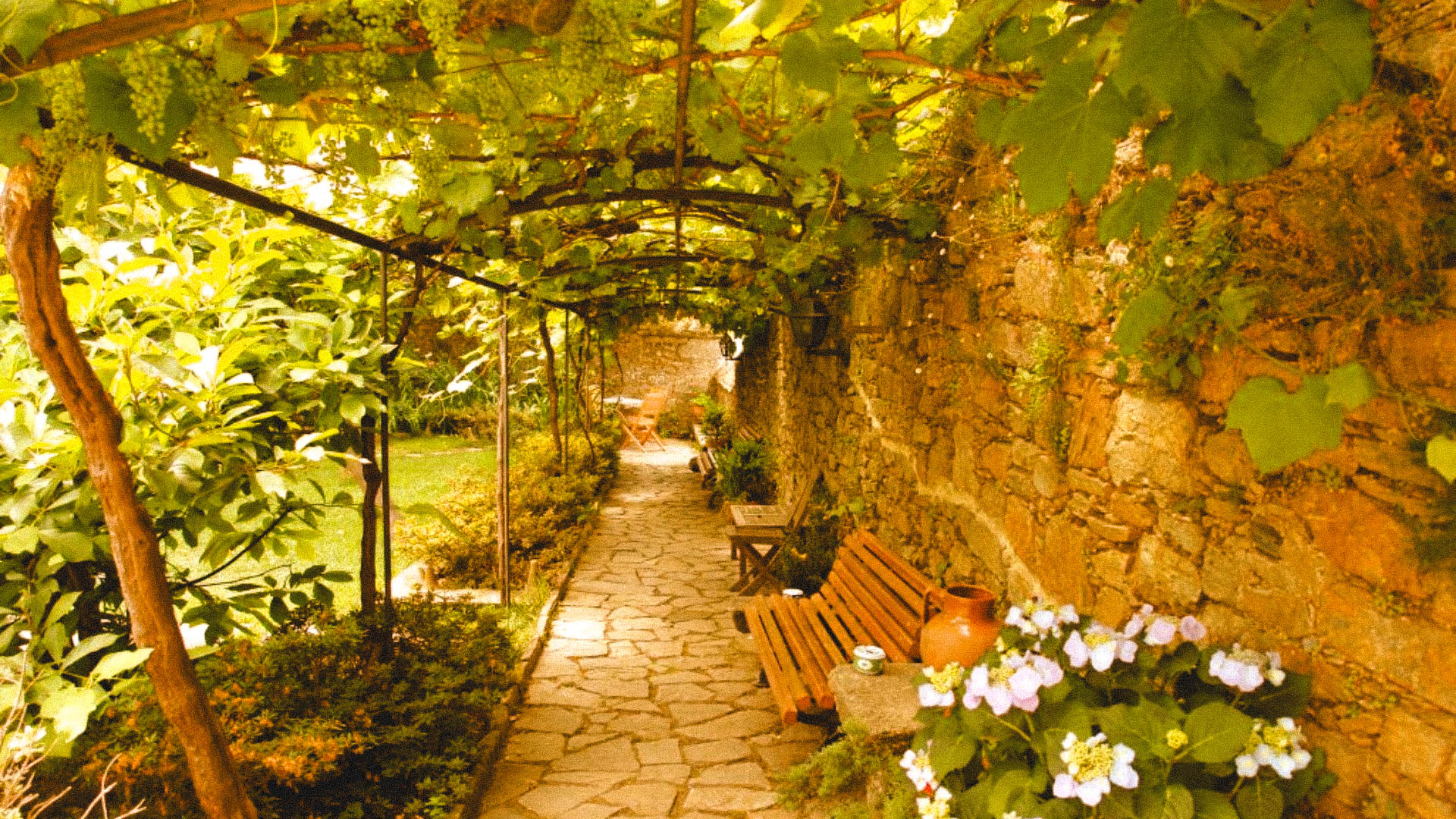
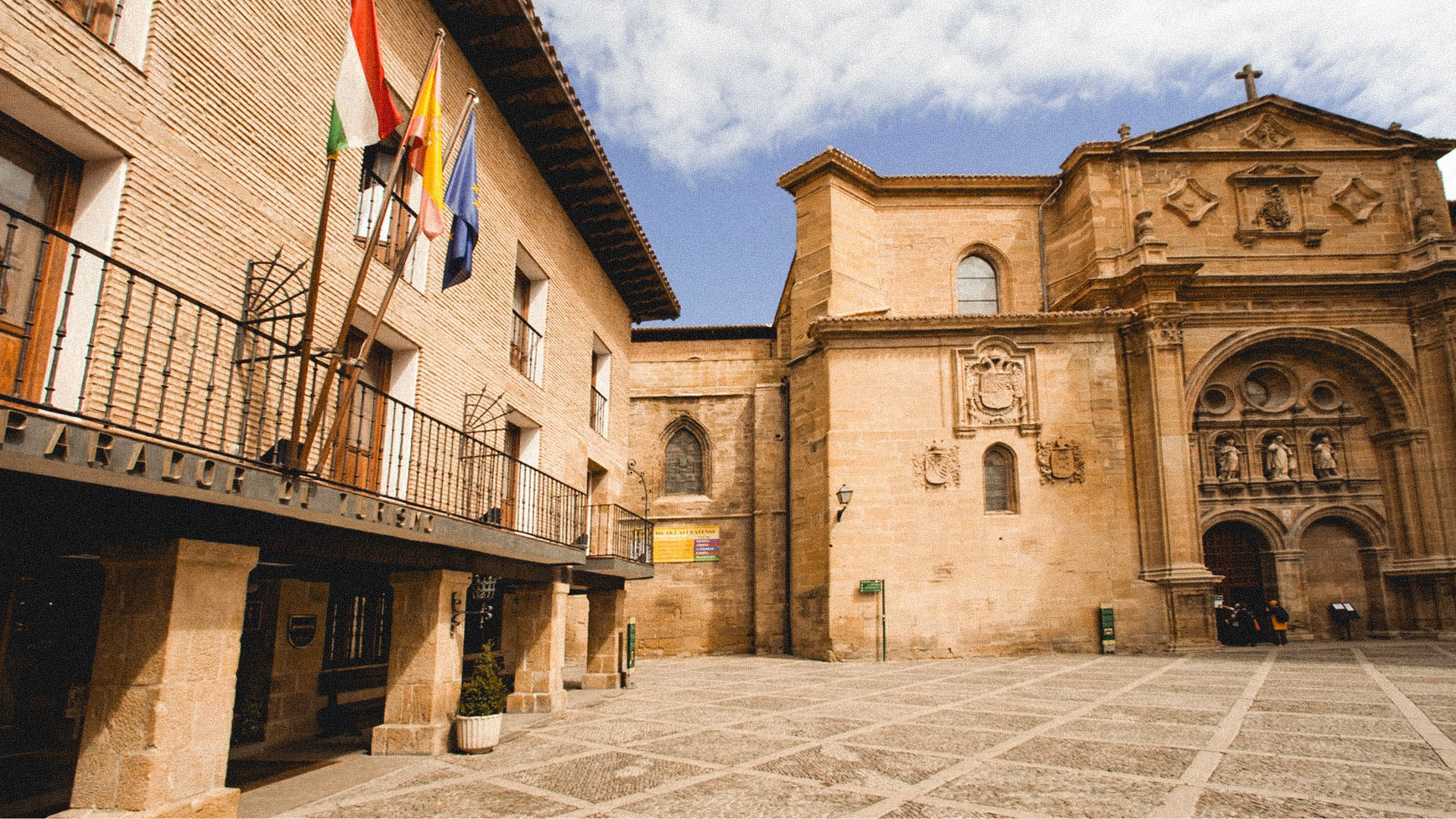
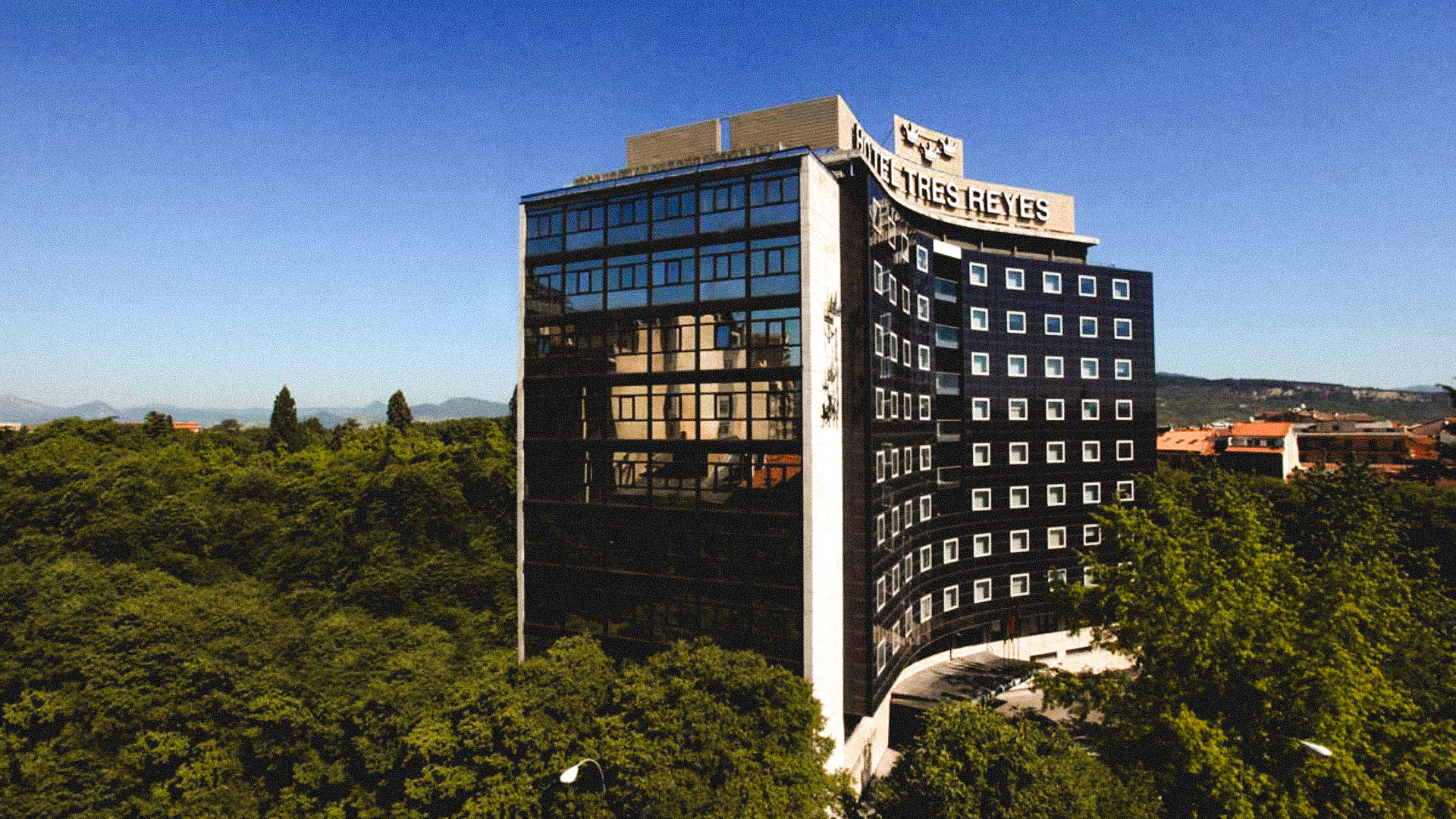
What’s included in your Camino?
Included
- Private accommodation with en-suite bathroom (depending on chosen category)
- Daily breakfast
- Basic insurance
- Standard MTB bike rental (option to upgrade to e-bike)
- 24/7 emergency phone assistance
- Detailed Camino guide with stages, maps, and tips
- Daily WhatsApp check-in and support
- Personalized recommendations for meals, dinners, and local visits
- Luggage transfer between stages
- Camino People welcome pack
Not Included
- Lunches and dinners not specified in the itinerary
- Drinks and extra snacks
- Flights or travel to the starting/ending point (optional transfer available)
- Laundry service
- Personal expenses
- Cancellation or comprehensive travel insurance (optional)
- Entrance fees to monuments or museums not included in the itinerary
- Tips
Extras (Available upon request)
- E-bike or premium bike rental
- Guided Camino (full-time or selected stages)
- Fully organized trip with exclusive activities
- Gourmet dinners or unique gastronomic experiences
- Private cultural visits or entrance tickets with guide
- Transportation to/from airport or other off-route locations
- Extra nights before or after the Camino
- Massage, physiotherapy, or yoga services
- Cancellation or extended travel insurance
FAQ
At Camino People, we offer bike rentals, both mechanical and electric, tailored to your needs. Our team will guide you in selecting the perfect model, ensuring a comfortable and unforgettable experience.
We take care of the entire preparation process for your Camino Francés by bike, from choosing the right bicycle to handling all logistics, so you can focus solely on enjoying the journey and discovering your own Camino.
Some stages can be more demanding, especially in mountainous areas and on uneven terrain.
However, most routes are accessible for people with a basic level of fitness, as long as they take breaks and adjust their pace accordingly.
The Camino is well-marked, so pilgrims rarely get lost. While there are challenging sections, such as steep climbs or mountain trails, the journey is deeply rewarding, and any difficulty is overcome with time, perseverance, and enjoyment of the experience.
Bringing pets on the Camino de Santiago, especially by bike, is not recommended.
While some travelers choose to walk with their dogs, the route includes challenging sections, narrow paths, and crowded areas, which can be uncomfortable and even unsafe for pets.
Additionally, many albergues do not allow animals, and certain trails are better suited for those without pets due to terrain and weather conditions.
If you decide to travel with a pet, be sure to plan ahead and confirm pet-friendly accommodations along the way.
Yes! You can absolutely do the Camino de Santiago by bike, even if you are not an experienced cyclist.
While some stages can be more demanding than others, most routes are suitable for beginner or intermediate cyclists.
It’s recommended to train a little beforehand to improve your endurance and confidence.
Make sure you have a suitable bike and comfortable gear, and remember that the Camino is an experience that can be adapted to your pace and needs.
Related Caminos
8 days - 7 nights

desde
7 days - 6 nights
desde